All Voice Actors Breathe
I remember when I first got into voice over years ago, one of the very first things I had to learn was not to hold my breath.  Learning to actually incorporate breathing was hard. Voice actors need to learn how to breath and when to breathe. But being told to breath from your diaphragm and then automatically doing it at all the right places in the script are two very different things. That’s why this week fellow voice over coach Diana Birdsall and I invited Michelle Blenker into our Clubhouse room “Ask the VO Coaches.”
Michelle Blenker is a well-established professional voice actor and coach. Michelle is the only coach we know who has developed a curriculum specifically for breathing and voice over. She began her vocal training as a young child, taking singing lessons in MA where she grew up. There Michelle learned a breathing methodology to protect the voice.
This practice is useful beyond VO, and would work for people in sales or public speaking as well Michelle noted. As both a trained opera singer and a graduate with a Speech and Hearing Science degree, Michelle has both the training in specific breathing programs and the knowledge and understanding of human anatomy to bring out the best in her voiceover students.
Does Your Voice Feel Tired After Recording All Day?
 We were eager to ask Michelle about vocal fatigue. Whether you are auditioning or doing booked work, often your voice feels tired as the day goes on. Our voice is a delicate instrument, Michelle explained. She said our entire being is used when we do voice over. We use our body but our vocal cords take the brunt of what we do so we need to use our whole body to support them. As we bring air into our larynx, we want the air to float through and we don’t want to push air in. She suggests that we reframe our thoughts about where our voice comes from and focus on the diaphragm.
How Can I Control My Breath More?
This is so common, from newbies to established professionals. Everyone wants to know how to best control their breath. Michelle cautions that if you sit, you often slouch which is problematic. In contrast, when you stand, you engage your legs. This provides a loosed base for your instrument. Apparently, most people barely use 40% of their air capacity!
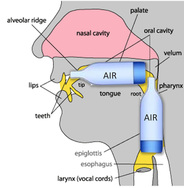 In order to increase this amount, you need to learn how to stand. Then, you need to engage your ribs and fill them more deeply with air. Lastly, you need to control how quickly the air is exhaled. When you learn to use your resonators properly, which are found in your sinuses and more, many voice talents discover that their true voice is actually higher than they realized.
Interestingly, Michelle cautions that a lot of people mistakenly think their voice comes from their chest. It does not. Our vocal apparatus is actually suspended quite miraculously in air by muscle and just floats in the throat. That is why pushing too much air can be so destructive. Our instrument is so delicate. Unlike drums, we need to phonate healthfully to prevent our vocal cords from getting damaged.
How Do You Avoid Vocal Strain?
 It seems like that raspy sound is still popular. Still, just because they ask for it, this does not mean you have to provide it if that is not your natural vocal tone. When we speak, our vocal cords vibrate and bump into each other to create sounds. When this happens, we can get nodules. Then, the vocal cords don’t open and close properly. To prevent rasp, there is an exercise you can do:
- Take a deep breath in and learn how to control the flow of air
- Do this singing and speaking exercise:
-
- Very softly and gently sing “Hah-may-mah-mo-meh-moo” across keys
-
Diana noted that she always feels like when she practices such exercises she should do them stronger and louder. Michelle explained that in this case it’s experiential and you should feel the softness and then put power behind it.
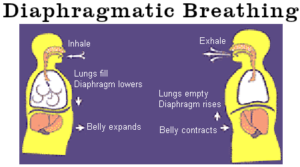 One of our attendees asked a question about promo reads. He said that when he tried to get deep resonance he loses his breath. Michelle confirmed that he stands and he said yes. She directed him to put one foot in front of the other. Then, he was told to tuck his bottom under to expand the back ribs. Michelle said that as he releases his breath he needs to control it and let it come through more slowly. She then told him to do the above exercise in the tucked stance, letting the air flow in and out like a balloon.
Another attendee wanted to know if cardio vascular exercise improves voice over endurance. She surmised that her best recording days are the days that she does her elliptical machine. Michelle suggested that your body is more oxygenated on work out days, so it is possible. She further instructed Lisa to work on practicing her breathing as she walks. To count her steps, and try to control her exhales as a means of learning to increase her breathing capacity.
We also had a touching chat with Keaston, a voice actor living with a spinal cord injury. Keaston has to sit all the time, so he was curious how this technique applies to him. I was fascinated to learn that like pilates, the technique that Michelle teachers her voice students was created for injured veterans after World War II. So, perhaps he could learn from it as well.
Final Thoughts and Breathing and VO
One of our regular attendees, Xavier, made an interesting observation. He noted that when he is really engaged in a script, you can’t hear him breathe and he incorporates the breath naturally. In the end, isn’t that the goal? To have good habits so that the breath flows naturally and all of these habits become second nature?
 We love to talk about our CRMs. Building client relationships is another hot topic. A few weeks ago Robert Sciglimpaglia started talking about
 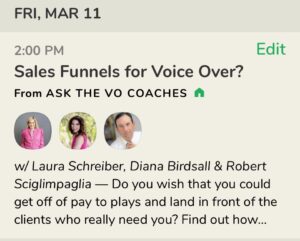 sales funnels for voice over. Diana Birdsall, fellow VO Coach and I got super excited. Why? After years of emails and LinkedIn outreach, sales funnels are different. And why work with Rob and his daughter Mary Brainard? Put simply: they are fantastic.
 A sales funnel is a fancy word for a sales process. If you picture a tube or a pipe that is wider at the top and narrow at the bottom, that is what a funnel looks like. In a sales funnel, as people move through the funnel, there are more people at the top and fewer at the end. This is because not everyone wants or needs you services at the moment they are pulled into the funnel. You can work to maintain contact with all who have come into the funnel through follow up emails, calls, and social media. Also, it came up in our clubhouse chat that funnels should really be used for experienced voice actors who have their business up and running. If you are new to VO and just starting out, this is not the system for you. You can try this once your booth is set up, your website is up, and you are ready to seriously invest in your business.
 Without doubt people love John DiMaggio’s character Bender on “Futurama.” So when DiMaggio’s contract was up, he faced a dilemma. Many voice actors have actually faced this very dilemma. Does he hold out for the rate he deserves? Should does he walk? Or perhaps in this instance, DiMaggio responded like his character Bender would have.
 In March of 2019, I was at the World Wide Radio Summit in Burbank. I remember Kelly Doherty saying something brilliant. She likened VO gigs to library books. Kelly said they are ours for a time then they go to someone else. I loved that. As someone who has always believed we get the jobs we
  When DiMaggio could not reach an agreement, many industry insiders came to his defense assuring everyone that they would not assume his role either
 Like with other genres of voice over, actors have to make a choice. Directors give input and Randy works with that. Randy shared an anecdote about her late, great friend Chris Corley. Chris is well-known for being the voice of the MLB network, movie trailers, imaging, and more. Anyway, once auditioned. He was cast in this role. Once hired, they told him his read was not what they wanted. But, he was so committed and they loved that commitment to the read. The choices we make when we read and the characters we choose matter so much across genres.
 Fast forward quite a few years. Now I have the luxury of having a weekly Clubhouse Room, “Ask the VO Coaches.” This week voice over legend Scott Parkin was our guest! Whether you know it or not, you likely know Scott! He is the voice and face of many recognizable brands as he does both voice over and on-camera work. He actually started out on morning radio. Scott has a national Tide TV commercial and many more. He has also made appearances on well-known shows like “Grace and Frankie.” Scott finds that the relationship between VO and on-camera work is symbiotic. Scott shared that most of his work comes in through his agents at DPN. As a single dad, his daughter Miranda grew up socializing with other talents in the DPN waiting room.
 Sometimes the stars just aline and you are graced with the presence of brilliance. On Friday, fellow VO coach Diana Birdsall and I were lucky to have the amazing voice actor and personal brand strategist Jonathan Tilley in our Clubhouse room. Many know Jonathan from both his courses League of List Builder at nd My Content Calendar, and if you don’t know Jonathan you should. He is both a generous soul who gives his best to help everyone he talks to and a creative genius. From voice actors to models to
  If you’re like me, you might be surprised to know that there are still BOTH videos and reels!! A reel is a sub-genre of a video. As mentioned before, IGTV, which was the YouTube of Instagram, is gone now. Videos are vertical. Reels do have certain characteristics:

