Reaching Out to A Coach
 You have a burning question, that’s great! And the good news, actually the really good news, is that there are A LOT of really wonderful coaches in voice over depending on both what genre you are looking to study and what your specific learning style is. Even better, many coaches have lots of free resources to offer! Between blogs, YouTube, Instagram, Facebook, and linkedIn, you can learn so much before you even have to open your wallet. So when it is time to actually invest in yourself and your voice over career, whether it is signing up for a class or a private lesson, there are som best practices to build a good relationship with your coaches.
Free Consultations
Most coaches offer a 15 to 20 minute free consultation. This is meant for BOTH of you to see if you are a good fit for each other. This is the time to ask your coach how they are different from other coaches and to see what their policies are. This is NOT the time to expect free training. This is not where you pick their brain for free. This is also not the time to expect an hour from their twenty minutes. They are offering you a glimpse. Be professional and assess. Take the glimpse for exactly what it is.
Blogs
Use and enjoy blogs to enhance your knowledge base. Is it okay to reach out and introduce yourself? Of course, connect with your industry peers. Is it ok to ask a question or two to extrapolate more in-depth understanding? Sure thing. Is it okay to try to get a free session out of the coach? No. There is a line. Begging for free advice because you like their blog is both distasteful and unprofessional. It also shows a genuine lack of understanding for what we do. Each of us are on such a unique and personal journey in voice over. So, writing to a coach who you have no relationship with and asking them to venture a guess is more than useless. Just don’t. Instead, save up for a session. Invest in coaching. Dive deeper! More training is never, ever waisted! We all have to keep working on our craft!
Social Media
Connecting with coaches on Social Media is great. It is a great way to learn about them as a person, a talent, and as a coach. You get to understand who they are within the parameters they have established. Some are very responsive to DMs and to comments, others are less so. Some may be responding directly while others may have a team who does this for them. Either way, be mindful of professional boundaries. This is meant to be a professional, working relationship. Would you message your doctor or accountant at 2 Am with questions repeatedly? If the answer is no, then perhaps also do not reach out to your voice coach at that time expecting a reply. They too maintain regular business hours.
Texting
In general, coaches do not have text relationships with students. Unless a coach says the words “Please text me about….” I would assume NOT to text a voice over coach. It is appropriate in this professional relationship to email them and let them respond in a timely manner.
Business Hours
Coaches are working professionals. They typically maintain normal weekday studio hours. Some may also offer coaching on the weekend, I do not. When you are looking for the coach who is the right fit for you, respect their business hours. It is common practice that they are available when you have them booked. Some coaches have time to answer questions between sessions, others do not, but each coach is different in this regard. Regardless of their practice, no coach wants to be stalked. They are instead looking for a meaningful working relationship where they can watch their students thrive.
Takeaways
I remember well what it was like to pay for one lesson at a time. Voice over coaching is expensive, it’s an investment. You want to feel like you are getting a lot of value for your money. I am also someone who likes to feel like I am building meaningful connections with the people I work with, so when I was the talent as opposed to the coach, feeling like the coach “got me” mattered a lot. I think if you really want to connect with your coach take the time to read their coaching profile, have that consultation, and check their references. At the end of the day, you are going to have to trust your gut a bit too. Sometimes we just click with someone and sometimes we don’t. I can tell you the one way to push a coach aside and ruin things from the start is to start asking for free coaching and advice before you know each other at all. Whatever you decide to do, please do not do that!
 audio. So my audio was immediately flagged as being insufficient for their needs. You get a little orange or red, depending on the screen settings of your monitor, triangle with an exclamation point in it.
 We love to talk about our CRMs. Building client relationships is another hot topic. A few weeks ago Robert Sciglimpaglia started talking about
 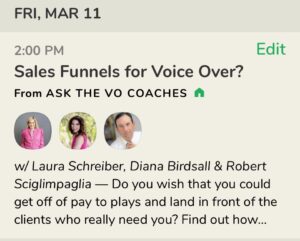 sales funnels for voice over. Diana Birdsall, fellow VO Coach and I got super excited. Why? After years of emails and LinkedIn outreach, sales funnels are different. And why work with Rob and his daughter Mary Brainard? Put simply: they are fantastic.
 A sales funnel is a fancy word for a sales process. If you picture a tube or a pipe that is wider at the top and narrow at the bottom, that is what a funnel looks like. In a sales funnel, as people move through the funnel, there are more people at the top and fewer at the end. This is because not everyone wants or needs you services at the moment they are pulled into the funnel. You can work to maintain contact with all who have come into the funnel through follow up emails, calls, and social media. Also, it came up in our clubhouse chat that funnels should really be used for experienced voice actors who have their business up and running. If you are new to VO and just starting out, this is not the system for you. You can try this once your booth is set up, your website is up, and you are ready to seriously invest in your business.
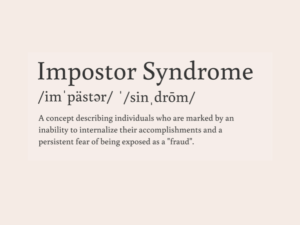
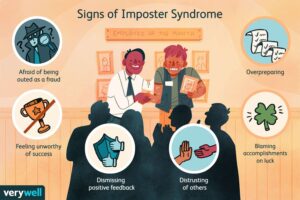 I’ve been a full time, professional voice over actor for quite a while now, but in the past year I started hearing for the first time a new term: imposter syndrome. I started hearing it on social media, on Clubhouse, and at conferences too. I found it surprising because in all my years in VO, I had never heard any other talents speak to this before. What I have learned is that this term refers to the feeling that one does not actually belong, or is not what they claim to be and is, instead, an imposter. Suddenly, in the past year, I am hearing about others feeling this way frequently. It is coming up often in conversation. Perhaps it is because many turned to voice over during covid. Perhaps it is because some start working or trying to work before they are actually prepared. For a multitude of reasons, suddenly I am hearing this all over the place. If you are interested in being a voice over actor, and you really want to succeed and do NOT want to feel like an imposter, perhaps consider my experience, as this has never been an issue for me.
 year, I worked with 4 coaches and took advanced acting and improv at a local theater. I spent sic to eight hours A DAY studying and working on my craft. I worked on scripts. I practiced characters. I recorded. I edited. I submitted to my coaches. I listened back to my assignments. I did research and followed prominent voice actors to see what they were booking. I took multiple private lessons each week. I was in group classes with GVAA. I had practice partners. I met with those partners. I did homework for those partners too and I took each and every assignment so seriously, as if my life depended on it. So when I say I had lots of training, that is just when I started out. Since then I have continued to have lots of coaching. Have coaching is the foundation of all we do. I think by the time my website launched, I was so ready to work that it never occurred to me that I was not prepared to serve my clients.
 Both as a student of voice over and now as a professional, I have always put in extremely long days. From morning to night, often going back into my booth after dinner, my days are long and rigorous. Sometimes new talents ask me when they will start booking. They tell me they have submitted 50 auditions. I try to keep a straight face. I typically submit more than 30 auditions in a day, even now, so 50 auditions is in no way impressive to me. I have often heard of the rule of 10. I believe that Gaby Nistico has even made a video about it. If you work 10 hours a day more than 10 months a year for 10 years that is when you start making six figures… Well, I believe there is something to this. I have always had the luxury of being in voice over “full-time.” Well, let’s flesh this out. What exactly does “full-time mean? To me, it means I maintain standard business hours and I am in my booth al day every day to serve my clients. The more you are available and the more you record and submit, the more legitimate your business is.
 When my business launched, in audition to lots of coaching and sweat equity under my belt, my first website helped establish my identity. I never had doubts about my identity as a professional. I had been told by every coach I ever worked with that even at the start of my career, I should introduce myself as a professional. I did so with confidence. As I get clients under my belt and had testimonials, I felt more proud of what I was building, but it never came from a place of doubt. I was certain that I was building a great service business that would help my clients get what they need.
 But do I really Need it…
 When I started my voice over business years ago I had headshots done for my website. While a long time ago people used to say that voice actors did not need to show their face, as the VO industry has continued to evolve and we, as talents, now have to bring in the bulk of our own work, it is on us to run our business like a business. If we want our clients to connect with us, having current pictures is a must. So, about a year back, I was presenting at an online eLearning conference and I was super excited. When they asked for my head shot, I became for cognizant of the fact that the photo no longer resembled me. I was thinner, my hair was shorter, I always wear glasses… the list went on. I decided to take new photos and update them. While my old headshots had been done by a professional, I took the new ones in my booth with an iphone. I loved them and was thrilled.