All Voice Actors Breathe
I remember when I first got into voice over years ago, one of the very first things I had to learn was not to hold my breath.  Learning to actually incorporate breathing was hard. Voice actors need to learn how to breath and when to breathe. But being told to breath from your diaphragm and then automatically doing it at all the right places in the script are two very different things. That’s why this week fellow voice over coach Diana Birdsall and I invited Michelle Blenker into our Clubhouse room “Ask the VO Coaches.”
Michelle Blenker is a well-established professional voice actor and coach. Michelle is the only coach we know who has developed a curriculum specifically for breathing and voice over. She began her vocal training as a young child, taking singing lessons in MA where she grew up. There Michelle learned a breathing methodology to protect the voice.
This practice is useful beyond VO, and would work for people in sales or public speaking as well Michelle noted. As both a trained opera singer and a graduate with a Speech and Hearing Science degree, Michelle has both the training in specific breathing programs and the knowledge and understanding of human anatomy to bring out the best in her voiceover students.
Does Your Voice Feel Tired After Recording All Day?
 We were eager to ask Michelle about vocal fatigue. Whether you are auditioning or doing booked work, often your voice feels tired as the day goes on. Our voice is a delicate instrument, Michelle explained. She said our entire being is used when we do voice over. We use our body but our vocal cords take the brunt of what we do so we need to use our whole body to support them. As we bring air into our larynx, we want the air to float through and we don’t want to push air in. She suggests that we reframe our thoughts about where our voice comes from and focus on the diaphragm.
How Can I Control My Breath More?
This is so common, from newbies to established professionals. Everyone wants to know how to best control their breath. Michelle cautions that if you sit, you often slouch which is problematic. In contrast, when you stand, you engage your legs. This provides a loosed base for your instrument. Apparently, most people barely use 40% of their air capacity!
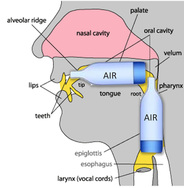 In order to increase this amount, you need to learn how to stand. Then, you need to engage your ribs and fill them more deeply with air. Lastly, you need to control how quickly the air is exhaled. When you learn to use your resonators properly, which are found in your sinuses and more, many voice talents discover that their true voice is actually higher than they realized.
Interestingly, Michelle cautions that a lot of people mistakenly think their voice comes from their chest. It does not. Our vocal apparatus is actually suspended quite miraculously in air by muscle and just floats in the throat. That is why pushing too much air can be so destructive. Our instrument is so delicate. Unlike drums, we need to phonate healthfully to prevent our vocal cords from getting damaged.
How Do You Avoid Vocal Strain?
 It seems like that raspy sound is still popular. Still, just because they ask for it, this does not mean you have to provide it if that is not your natural vocal tone. When we speak, our vocal cords vibrate and bump into each other to create sounds. When this happens, we can get nodules. Then, the vocal cords don’t open and close properly. To prevent rasp, there is an exercise you can do:
- Take a deep breath in and learn how to control the flow of air
- Do this singing and speaking exercise:
-
- Very softly and gently sing “Hah-may-mah-mo-meh-moo” across keys
-
Diana noted that she always feels like when she practices such exercises she should do them stronger and louder. Michelle explained that in this case it’s experiential and you should feel the softness and then put power behind it.
 One of our attendees asked a question about promo reads. He said that when he tried to get deep resonance he loses his breath. Michelle confirmed that he stands and he said yes. She directed him to put one foot in front of the other. Then, he was told to tuck his bottom under to expand the back ribs. Michelle said that as he releases his breath he needs to control it and let it come through more slowly. She then told him to do the above exercise in the tucked stance, letting the air flow in and out like a balloon.
Another attendee wanted to know if cardio vascular exercise improves voice over endurance. She surmised that her best recording days are the days that she does her elliptical machine. Michelle suggested that your body is more oxygenated on work out days, so it is possible. She further instructed Lisa to work on practicing her breathing as she walks. To count her steps, and try to control her exhales as a means of learning to increase her breathing capacity.
We also had a touching chat with Keaston, a voice actor living with a spinal cord injury. Keaston has to sit all the time, so he was curious how this technique applies to him. I was fascinated to learn that like pilates, the technique that Michelle teachers her voice students was created for injured veterans after World War II. So, perhaps he could learn from it as well.
Final Thoughts and Breathing and VO
One of our regular attendees, Xavier, made an interesting observation. He noted that when he is really engaged in a script, you can’t hear him breathe and he incorporates the breath naturally. In the end, isn’t that the goal? To have good habits so that the breath flows naturally and all of these habits become second nature?
 When you build a house, sometimes you are doing an update to make a space your own and sometimes you are doing a gut renovation. Either way, from the outset, you need to consider your goals for the project. In voiceover, knowing your goals enables you to have direction in your daily pursuits. If you know where you want to be, and if you have a clear vision for yourself, it is easier to work towards reaching those goals. And the goals you have might well be completely different from other voice talents you know. For instance, I do not do medical narration or audio books. Two of the women in my accountability group work in both of these genres, so their goals and their day to day marketing endeavors look quite different. As a professional voice over actor, I am very clear about my passions and where I want to spend my time. This is a key component of my mindset.
 Even though I am a working creative, from the start I have run my business like a business. Our mindset and the choices we make determine whether voice over is a business or a mere hobby. Do you want this to be your career or something you simply dabble in? For me, from day one, this was going to be a career. There was no other option. When I decided to pursue voiceover, I did so in lieue of returning to teaching, so I had the luxury of plunging into VO full time from the get go. Besides working full-time, other choices helped establish this is a business. Using a CRM is essential. This helps you track all of your outreach, your costs, your bookings, your contacts… all of your efforts in one place. I have blogged before about my experience using Voiceoverview, but I truly believe this specific CRM is essential to the success of my business.
 If you really want to succeed in voice over, and establish yourself as a professional voice talent, you need to have a professional studio. First, it is essential to maintain business hours. As a business owner, if you want to be available and accessible to your clients, you should have set business hours each day. For me, I typically work from 8 am- 6 pm, and schedule breaks for myself at my lunch hour for things like exercise classes or seeing friends. I also use my lunch hour to make myself available for consultations with new students or people looking for demo. But, the main point, is that I am available to clients all day, every day, during regular business hours.
 In general, the platform you are on matters! Some pay-to-plays and even many rosters do not allow you direct interaction with the clients. The client belongs to them, not you. Their goal is for the client to come back to their site, to their platform. You, the paying talent, are only a means to that end. Other pay-to-plays, in contrast, let you interact directly with your client. Do your homework and start booking on those sites. Wouldn’t it be great if the next time the client needed you they just came directly to you, and you did not even need to audition? And wouldn’t it be great if that happened over and over with multiple clients? That’s how you build a business!
 So let’s go back to this client that you’ve booked on this pay to play for a commercial that you can interact directly with. Let’s say this job comes in on a Saturday and it’s a “Rush” job. Do you actually have anything else going on? Did you really need to re-shuffle your life to accommodate them? To me, if the client is already paying a nice rate, I would rather dazzle them with my super fast turn-around time and ease of availability than nickel and dime them. After all, how does it make you feel when you are charged extra for every little thing by a service provider? Instead, make it easy for the client to get exactly what they need as soon as they need it. Do an awesome job right away. Do you know what will happen if you do your job well and quickly? The client will be happy.
 In the course of your email discourse, try to start getting to know your client. You can start with the basics: ask them how they are and share a tidbit about your day or your week. If you live in a different region, chats about the weather can actually be riveting. I happen to be a working mom, so I love bringing that into the fold.
 Every job matters. Clients have a choice when casting and we are lucky to book what we book. An attitude of gratitude goes a long way. At the very least, send a hand-written thank you card. If you have an international client, send a virtual card. Let them know that you appreciate their business and act as if you are part of their team, because you are! Wish them well when presenting the finished audio, and mention your next collaboration. And in thanks. Sometimes, for larger projects, a thank you gift is appropriate. From agents to project managers to video producers to creative directors, it depends who you are working with and what the project was, but I have sent gifts ranging from Starbucks gift cards to chocolate to giant containers of popcorn.
 Make sure to maintain a relationship with your clients! You already know they like you, they already cast you once! So, don’t lose contact. Sometimes newsletters are great for reminding them that you are still available. More personal quarterly check-ins are, however, extremely important. You can share a tid-bit of wrk that might be relevant to them as well. You can check out their social media and new content and engage and comment on it. It’s really important to be genuine and actually have something to say, but it’s also important to simple stay top of mind. Your voice many not be perfect for every project, but you don’t want to miss out on a casting simply because the client has forgotten that you exist. Be present. Engage. Be the talent they are thrilled to hear from.
 working while my family is outside enjoying a beautiful day together. I never feel like I am missing out because I have very specific goals and I am on a mission. Often having fun and reaching one’s goals are mutually exclusive. That brings me to my current conflict, I am a mom of twins, and my twins are rising seniors in high school. College visits are not only an essential part of the admissions process, but my twins have unique interests, so they are looking at entirely different schools. At the moment, all of my values as a parent and goals as a solopreneur are being put to the test: am I steady enough to juggle everything and be there for my kids while continuing to fuel my business? I have felt tremendous pressure, and been having a constant mental struggle, until our weekly Clubhouse today.
 is an on-going course that you can still take! Since then, I have followed Jonathan and continued to learn from him regularly on social media. I went to school for Political Science and History, so there was a major gap in my marketing knowledge. I studied with Jonathan to fill said gap. Anyway, the Clubhouse is meant to help others in the community, but this one hour with Jonathan left me feeling so re-inspired. It reminded me
 If you’re a professional voice over actor like me, and like me you’ve been in the business a while, then you know it is not so often that we get to speak directly with the folks who run casting platforms. Or with agents. Typically candid conversations like this only happen at conferences. It just so happens that one of my VO besties, the amazing Liz Atherton, who for many years was the founder and owner of Texas based TAG Talent, is now the brains behind Cast Voices, the newest casting platform that is sure to bring great things to our industry (know wood). Liz has an amazing team, including Nick Krause, an on-camera talent who also does some VO, and Bobby and Elizabeth Alcott. They have all worked really hard to bring us something that us new and different. They are extremely transparent in all of their practices, and they want to create something that raises the bar. In this scenario, we have unique, inside access.
  f you didn’t know, Diana Birdsall and I run a weekly Clubhouse in our Club “Ask the VO Coaches.” Last week, Liz Atherton and Nick Krause came into our club to chat with us all about the awesome features of Cast Voices. What made the hour special was that many guests got to ask their questions directly to Liz and Nick, and there was a great back and forth exchange. I noticed several things. First, Liz comes from a place of grattitude. She is so profoundly appreciative of the support they have had thus far from the voice over community. She views the process as extremely collaborative and despite her many years as an agent, speaks to every single talent with respect and patience. Next, Liz and Nick care very much about being clear and transparent about all practices. For example, if a project manager on the platform posts a job for $500, the talent sees the job as $500. They are not chipping away at it or altering anything. I also noticed that they are willing to engage in community dialogue. When a bling talent commented about accessibility issues on the site, Nick was extremely responsive and will to hear all suggestions about how to improve the tech. This is a team determined to work hard for the voice over community.

