How did I end up doing Improv?
Firstly, I never set out to study improvisational technique when I started doing voice over. Early in my VO career I worked with amazing coach Fred Frees. Fred was my character coach. We were doing private lessons working towards a character demo. Fred is not only an established talent, but he also grew up in the industry. Fred happens to be the son of VO legend Paul Frees. There is not a voice, character, or trick that Fred can’t do. The man is amazing. One day in one of our lessons Fred told me I had to find an improv class. For me, this was out of my comfort zone. He told me that he heard repetition in my characters and that I was falling into patterns. The only way to break this was with an improv class.
Why was I nervous? Well, in the safety of my studio, I was fearless in front of a microphone. Fred suggested leaving the booth and going to an actual theater with real live people. Learning a very new different skill set was scary. It was daunting. And, it was necessary.
I found a class called “Advanced Acting and Improv” at Paper Mill Playhouse. Taught by Broadway great Elisa Va Duyne, the class was hard. I was not used to learning lines. The amount of drama was also a big change. Physicality amongst others was also new to me. But I started the class none the less. Want to know how long it took for Fred to hear a difference once class started? Fred heard a difference in my reads in one week. He said I was like a different person in our sessions.
Scott Parkin and Voice Over
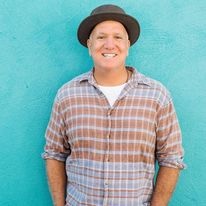 Fast forward quite a few years. Now I have the luxury of having a weekly Clubhouse Room, “Ask the VO Coaches.” This week voice over legend Scott Parkin was our guest! Whether you know it or not, you likely know Scott! He is the voice and face of many recognizable brands as he does both voice over and on-camera work. He actually started out on morning radio. Scott has a national Tide TV commercial and many more. He has also made appearances on well-known shows like “Grace and Frankie.” Scott finds that the relationship between VO and on-camera work is symbiotic. Scott shared that most of his work comes in through his agents at DPN. As a single dad, his daughter Miranda grew up socializing with other talents in the DPN waiting room.
Scott Talks Improv and Voice Over
Diana Birdsall and I asked Scott why voice actors should study improv? Scott explained that improv helps you find a character. It also helps you find that sought after conversational read. For example, think about what you like to do for fun. When you respond, you make it real, including stops and starts. Scott was great fun in the Clubhouse! He fell into many characters for us. He was Angus, a Scottish soccer player. Then he was Doug from Doug’s BBQ in Texas. First Scott became the character. Then he showed how they would say their lines with ease.
Improve Across the Genres
We asked Scott which genres of voice over improv helps with. He said it is useful in all genres. We talked about assuming characters in genres like eLearning or narration. One of our attendees, Jeffrey, told Scott he is taking improv classes in Atlanta. Jeffrey asked Scott what he should look for in class. Scott said it depends on your goal, which might include:
- On-Camera work
- Sharpening your skills
- Writing Sketches
The conversation went on to consider if improv practice can happen via zoom. Scott said that he has adapted his drills to work on-line. But, in-person classes are still the gold standard.
The Culmination of Improv: “Comet Casino”

Scott has a daughter Miranda. Miranda is both a voice actor and an amazing artist. Perhaps it’s because Miranda grew up surrounded by voice actors. Maybe it’s because Miranda’s dad bursts into character at the snap of a finger. Or most likely it’s because Miranda has oodles and oodles of talent! This 21 year- old phenom has created her own cartoon: “The Comet Casino.”
The show boasts an all star cast with the likes of Tara Strong, Billy West, and Maurice LeMarsh to name a few. Dad and daughter are doing all the leg work themselves. From creating the team to raising funds for animation, it is a family project. What’s the point? If you connect the dots, it’s no accident that a kid with profound improv training did this. Miranda can act. She is also an artist. Miranda had a vision. This gal also happens to have an amazing dad behind her. Now, am I saying that if you study improv you can write a show? Maybe not. But the point is, you never know where years of exposure and on-going training and coaching will take you. That’s the point. Work on your craft. In conclusion, keep working on it. And if you have the means, also support this amazing family here.
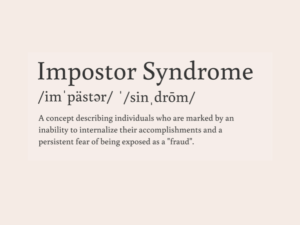
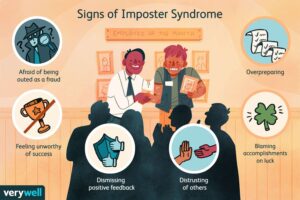 I’ve been a full time, professional voice over actor for quite a while now, but in the past year I started hearing for the first time a new term: imposter syndrome. I started hearing it on social media, on Clubhouse, and at conferences too. I found it surprising because in all my years in VO, I had never heard any other talents speak to this before. What I have learned is that this term refers to the feeling that one does not actually belong, or is not what they claim to be and is, instead, an imposter. Suddenly, in the past year, I am hearing about others feeling this way frequently. It is coming up often in conversation. Perhaps it is because many turned to voice over during covid. Perhaps it is because some start working or trying to work before they are actually prepared. For a multitude of reasons, suddenly I am hearing this all over the place. If you are interested in being a voice over actor, and you really want to succeed and do NOT want to feel like an imposter, perhaps consider my experience, as this has never been an issue for me.
 year, I worked with 4 coaches and took advanced acting and improv at a local theater. I spent sic to eight hours A DAY studying and working on my craft. I worked on scripts. I practiced characters. I recorded. I edited. I submitted to my coaches. I listened back to my assignments. I did research and followed prominent voice actors to see what they were booking. I took multiple private lessons each week. I was in group classes with GVAA. I had practice partners. I met with those partners. I did homework for those partners too and I took each and every assignment so seriously, as if my life depended on it. So when I say I had lots of training, that is just when I started out. Since then I have continued to have lots of coaching. Have coaching is the foundation of all we do. I think by the time my website launched, I was so ready to work that it never occurred to me that I was not prepared to serve my clients.
 Both as a student of voice over and now as a professional, I have always put in extremely long days. From morning to night, often going back into my booth after dinner, my days are long and rigorous. Sometimes new talents ask me when they will start booking. They tell me they have submitted 50 auditions. I try to keep a straight face. I typically submit more than 30 auditions in a day, even now, so 50 auditions is in no way impressive to me. I have often heard of the rule of 10. I believe that Gaby Nistico has even made a video about it. If you work 10 hours a day more than 10 months a year for 10 years that is when you start making six figures… Well, I believe there is something to this. I have always had the luxury of being in voice over “full-time.” Well, let’s flesh this out. What exactly does “full-time mean? To me, it means I maintain standard business hours and I am in my booth al day every day to serve my clients. The more you are available and the more you record and submit, the more legitimate your business is.
 When my business launched, in audition to lots of coaching and sweat equity under my belt, my first website helped establish my identity. I never had doubts about my identity as a professional. I had been told by every coach I ever worked with that even at the start of my career, I should introduce myself as a professional. I did so with confidence. As I get clients under my belt and had testimonials, I felt more proud of what I was building, but it never came from a place of doubt. I was certain that I was building a great service business that would help my clients get what they need.
 For me, my journey started in the mid-1990s. I was a student at Columbia University in New York City. I was studying political science. My younger sister Julie also went to school at Columbia, and we went out to eat off campus often. If you know anything about New York, you know that lots of waiters and waitresses are also actors who have to pay the bills. Well my sister and I have always sounded young, but when we were young we really sounded young. We also had a habit of speaking in unison and saying the same thing at the same time. It became a pattern that we would got to places like Ocean Grill or Isabella’s and every single time our server would comment on our voices. It wouldn’t just happen there, it would happen at Bergdorf’s or wherever we shopped. It even happened in taxi cabs. Often the follow up to asking if we are twins, and we are not, is that we should be in voice over.
 I remember the day clearly. It was winter during my sophomore year and I went to the famous Drama Book Shop in Times Square to research how to become a voice over actor. One of the perks of being a student in NYC is that all of this was right at my fingertips. I was able to learn so much just be talking to the people who worked at the book shop, and I left with some books and a copy of Variety in hand. What I quickly discovered was that while I was in the right city to pursue voice over, at that time everything happened in person. I would have to take my tape cassettes around, show up in person for auditions, and actually go to studios for gigs. Being a student at Columbia and doing VO seemed mutually exclusive at that moment. My studies were intense and they were my primary concern, so voice over was put on the back burner.
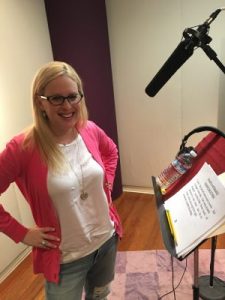 My chat with Marie gave me the impetus to get started in voice over. I began researching coaches, writing a business plan, and researching how to build a studio. In the coming months, I started to lay the foundations for my VO business. I began working with Anne Ganguzza, my first coach. I started planning for my VO website, and I started having my studio built. I also had tech training to learn how to record and edit. I also began taking advanced acting and improv classes at Papermill Playhouse, our local theater. Over the years I have worked with many coaches, many of the best in the industry. I continue to push and hone my skills, update my demos, attend conferences, and build. A voice over career does not happen over night. I am so thankful for the work that I have had, and I have big dreams for what is to come!
 Even though I work full time, as a mom of teenage twins, I am in the car A LOT. My SUV has a great sound system, and I confess I enjoy belting it out. The other night I had a realization though: unless my four year old niece is in the car, I am typically belting it out alone. And it is not that I am not playing great music, because I can assure you that it is always a party when I drive. I think it has more to do with the personalities of my husband and kids.
 Snoop Dogg. Gladys Knight. Jonas Brothers. It doesn’t matter, I’m into it! So what on earth does this have to do with voiceovers? Well, people often ask me how I got into voice over or how I started booking work. It’s a tricky question. There are a lot of talented people who do what I do. There are also a lot of people who have had access to the training that I have had. They may even have the demos that I have. So, what sets us apart? Our schtick. Our unique personality and spark. The ability to put my dignity, airs, “whatever” in the metaphorical back seat and whoop it up for the clients, is essentially what I have been practicing for years. One of my beloved coaches, Fred Frees, used to tell me if I was going to “make it” I had to be fearless in front of the microphone. This singing in the car is exactly the same thing. When you have the reckless abandon to belt it out in front of everyone, odds are you will also be fearless in front of the mic.
 I did not go into voiceover because I wanted to sing. To the contrary, the jobs that involve that component are typically my hardest. The point of this is that the silly abandon that we have when playfully, often gleefully belting it out in the car whether we are alone or have an audience of 3, that is what we need to bring with us into the booth for every job. The ability to switch gears as quickly as a song changes on the radio is priceless. The ability to reinvent ourselves every two minutes is also priceless. All the professional training in the world cannot change the feeling that you have in your gut. I have been told by another coach that I “dive in” rather fast. I believe that, too, is one of my greatest assets! Whether it is a new station I am imaging for and each take on a line needs to be fresh, or a 15 second holiday spot, or an eLearning module, be the talent who is willing to shake things up and delight your client at every turn!

