In the Past Year I Learned a New Phrase
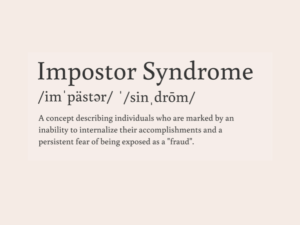
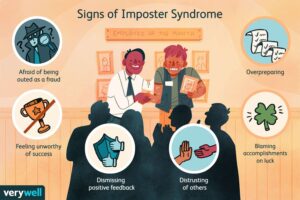 I’ve been a full time, professional voice over actor for quite a while now, but in the past year I started hearing for the first time a new term: imposter syndrome. I started hearing it on social media, on Clubhouse, and at conferences too. I found it surprising because in all my years in VO, I had never heard any other talents speak to this before. What I have learned is that this term refers to the feeling that one does not actually belong, or is not what they claim to be and is, instead, an imposter. Suddenly, in the past year, I am hearing about others feeling this way frequently. It is coming up often in conversation. Perhaps it is because many turned to voice over during covid. Perhaps it is because some start working or trying to work before they are actually prepared. For a multitude of reasons, suddenly I am hearing this all over the place. If you are interested in being a voice over actor, and you really want to succeed and do NOT want to feel like an imposter, perhaps consider my experience, as this has never been an issue for me.
Lots of Training
When I started working in voice over, really working, it was after no less than a year of working at getting into voiceover. In that  year, I worked with 4 coaches and took advanced acting and improv at a local theater. I spent sic to eight hours A DAY studying and working on my craft. I worked on scripts. I practiced characters. I recorded. I edited. I submitted to my coaches. I listened back to my assignments. I did research and followed prominent voice actors to see what they were booking. I took multiple private lessons each week. I was in group classes with GVAA. I had practice partners. I met with those partners. I did homework for those partners too and I took each and every assignment so seriously, as if my life depended on it. So when I say I had lots of training, that is just when I started out. Since then I have continued to have lots of coaching. Have coaching is the foundation of all we do. I think by the time my website launched, I was so ready to work that it never occurred to me that I was not prepared to serve my clients.
Long Days
 Both as a student of voice over and now as a professional, I have always put in extremely long days. From morning to night, often going back into my booth after dinner, my days are long and rigorous. Sometimes new talents ask me when they will start booking. They tell me they have submitted 50 auditions. I try to keep a straight face. I typically submit more than 30 auditions in a day, even now, so 50 auditions is in no way impressive to me. I have often heard of the rule of 10. I believe that Gaby Nistico has even made a video about it. If you work 10 hours a day more than 10 months a year for 10 years that is when you start making six figures… Well, I believe there is something to this. I have always had the luxury of being in voice over “full-time.” Well, let’s flesh this out. What exactly does “full-time mean? To me, it means I maintain standard business hours and I am in my booth al day every day to serve my clients. The more you are available and the more you record and submit, the more legitimate your business is.
Sure of My Identity
 When my business launched, in audition to lots of coaching and sweat equity under my belt, my first website helped establish my identity. I never had doubts about my identity as a professional. I had been told by every coach I ever worked with that even at the start of my career, I should introduce myself as a professional. I did so with confidence. As I get clients under my belt and had testimonials, I felt more proud of what I was building, but it never came from a place of doubt. I was certain that I was building a great service business that would help my clients get what they need.
Wholly Committed
Another reason I think I never suffered from this imposter syndrome is that I was entirely committed from day 1. Basically, I bet the house on it. I built a high-end studio. I had an expensive microphone. I was working full time. It was never an option for it to not work. Success was my only possible outcome. It never occurred to me that I was not a voice actor. I set out to live this life and I did. Period. Sometimes we have choices in this world, but as a working mom, failure was not an outcome I was willing to explore. I only had one potential outcome for myself and my children, and that was for the business to take off.
 When you build a house, sometimes you are doing an update to make a space your own and sometimes you are doing a gut renovation. Either way, from the outset, you need to consider your goals for the project. In voiceover, knowing your goals enables you to have direction in your daily pursuits. If you know where you want to be, and if you have a clear vision for yourself, it is easier to work towards reaching those goals. And the goals you have might well be completely different from other voice talents you know. For instance, I do not do medical narration or audio books. Two of the women in my accountability group work in both of these genres, so their goals and their day to day marketing endeavors look quite different. As a professional voice over actor, I am very clear about my passions and where I want to spend my time. This is a key component of my mindset.
 Even though I am a working creative, from the start I have run my business like a business. Our mindset and the choices we make determine whether voice over is a business or a mere hobby. Do you want this to be your career or something you simply dabble in? For me, from day one, this was going to be a career. There was no other option. When I decided to pursue voiceover, I did so in lieue of returning to teaching, so I had the luxury of plunging into VO full time from the get go. Besides working full-time, other choices helped establish this is a business. Using a CRM is essential. This helps you track all of your outreach, your costs, your bookings, your contacts… all of your efforts in one place. I have blogged before about my experience using Voiceoverview, but I truly believe this specific CRM is essential to the success of my business.
 If you really want to succeed in voice over, and establish yourself as a professional voice talent, you need to have a professional studio. First, it is essential to maintain business hours. As a business owner, if you want to be available and accessible to your clients, you should have set business hours each day. For me, I typically work from 8 am- 6 pm, and schedule breaks for myself at my lunch hour for things like exercise classes or seeing friends. I also use my lunch hour to make myself available for consultations with new students or people looking for demo. But, the main point, is that I am available to clients all day, every day, during regular business hours.

