Why Try A New Genre at This Point in My Career?
 You might be wondering, as a full time voice actor with pretty stellar commercial bookings, why would I go after a new, and frankly uniquely different genre now? Well, if you are new to my blog you might not know that my twins left for college this year. So at the age of 45 I became an empty nester in the snap of a finger. My life was turned upside down and for someone life me downtime is not desirable. I need to be busy every second. The notion of learning a new skill set, something I could get lost in and spend hours studying, became very appealing. When I started in voice over many years ago, long before I ever had a single client, I looked at the study of the craft of commercial voice over as my full-time job. It served me well. My passion for a given genre can lead me to success when I apply that passion to the detailed study of it. So, non-fiction audio books, here I come!
Working With an Awesome Coach
As a voice over coach myself, I can tell you that learning from a top coach is essential to success. I started to work with Sean Pratt. He is a perfect fit for me. If you don’t know Sean, he has a very specific curriculum. He takes you through both the craft or study of how to work on the copy, and also teaches you about the business side of audiobooks. I LOVE my lessons with Sean. I love the homework he gives. I can actually feel myself learning. I very much enjoy working through the assignments. The challenge, the struggle, is something I have not had for years. His curriculum is excellent. I am confident that next year, after going through all of the lessons, I will be prepared to work in audiobooks.
Applying the Skills
In our last session Sean told me it is time to start putting myself out there and auditioning on ACX. Sean advised me that I need to get titles under my belt. Fortunately, I have a sense of where my voice fits in and what kind of texts I want to read. I seem to have a decent booking ratio here too, and in the first two weeks I actually booked two books. After doing my elated happy dance in the booth and celebrating with my husband, the real work of recording the books began!
What I didn’t Know…. The Tech
Well, if I thought I was learning a lot from Sean in terms of technique and craft, I can’t tell you how much I learned from actually working on a book. Initially I began marking my script in iAnnotate just as Sean recommend. I was using my trusty Apple Pencil and quite happy. I realized I needed help with iAnnotate so I paid for Karen Commins’ videos. They are outstanding by the way, as are all of her resources, and if you are new to audiobooks like me her website is a must visit!
Organizing the audio and staying organized was the next part of the learning. I found myself writing notes both on the iPad and in my booth. I also found myself creating lots of different subfolders in dropbox that were new to me due to the length of the audio.
I was quite pleased with everything and it was time to upload it into ACX when I hit my first major snag. ACX has something that analyzes your audio when you upload it. I had processed it same as I always do for commercials and eLearning. The same stacks that make producers all over the world happy got flagged. I learned about something called and RMS and apparently my number was too high, which actually meant my sound was too low. If you are on Twisted Wave, this is the meter on the right side. Well, I was in a panic. I had no idea what to do.
All these years as a full time talent and it was like I was starting over. I was at a total loss. I called an engineer who does commercial and explainers and he told me to normalize it. I did that and I was still not within the range. If an engineer who went to college and graduate school for this couldn’t help, how on earth would I sort this out? I went to YouTube and I did find videos with others talking about the issue, but most of them used Audacity or Audition as their DAW, not Twisted Wave.
 In the midst of my break down in the booth, I heard from a friend and fellow coach Jack de Golia. G-d his timing was good. He told me I needed to reach out to George Whittam (AKA George the Tech) for a specific stack just for audio books. Hallelujah. There was hope in site. If you don’t know George, you can actually pay for 911 emergency service to get bumped to the front of the line in cases like this, otherwise it takes about a week.
I got online and both emailed and Facebook messaged George. George is a G-d-send, and angel, and a genius all wrapped up in one. To me delight he was available and helped me right away. I followed the steps of sending my audio and my gear. George followed up, within the hour, (I actually think it was less) of sending me a stack and a video just for me about how to work with all of this.
I got lucky. George happened to be free when I needed him and I had a friend who could point me in the right direction. Crisis averted! This is the very short abridged version of the story that skips the details of missed dinner, a very supportive husband who tried hard to do what he could, and me acting like a toddler having a tantrum. The good news is that very night I submitted the book to the ACX specs. I wish I could say I behaved better, but I did learn so much!
 Interestingly, an early morning text from my nutritionist got me thinking about why positivity matters so much. At the end of her text, which happens to be the first text of my day, it said “No effort is too little in the big picture. It ALL adds up to progress. Keep your eyes on the goal and have a glorious day!” That is how my day started. Who wouldn’t feel great after such a message? And this got my wheels turning about the importance of what I put out to my own VO students. I am someone who has always responded well to positive reinforcement. More than that, I thrive on it. Feedback with a positive spin is something I can run with. Conversely, when I feel criticized or scrutinized I do not perform well. I have studied the psychology behind this in graduate school and in professional development workshops as a teacher, and I try to bring all this with me pedagogically when I coach. I do believe that for voice over students to get the most out of their experience they need positive reinforcement.
 Before working in voice over, I actually taught middle and high school history at an all-girls school in New York City. For one of our teacher in service days, we had a neurologist come and talk to us about positive reinforcement. Did you know that there have been studies that prove that people respond better when their papers are marked with green pen than with a red pen? Further, students to respond better to encouragement to improve and build
 I cherish building close relationships with people I work with. In the past few years, I have been come close with a “client” named Steve. First, I got to know Steve when he owned a production agency in Portland. Then, he opened a boutique talent agency. Over time, Steve became a close and cherished friend. When Steve opened his agency he actually decided to refer talents who needed coaching to me. Why? In addition to the curriculum I developed, he liked my positive way. Even recently, while in a period of transition onto a new path in life, Steve asked me if I would direct a session for a client because of my positive way. The point is that people need this kind of support and vibe, it makes it easier to work together.
 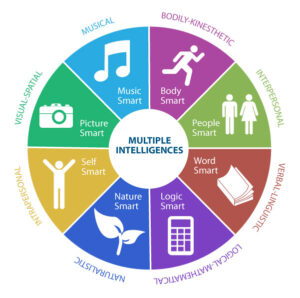 When I was in graduate school we also spent a lot of time learning about Howard Gardner and his theory of multiple intelligences, that different people learn and absorb material in different ways. I can tell you that as I get older I think the way that I myself learn has changed. But, the way that I relate to people and connect with people has only changed in degree and not manner. I would say that I am perhaps more sensitive now, than when I was young. I am a delicate soul, and especially something as personally as our art, well, we are all unique and while there are industry standards and benchmarks we need to meet, I would like, myself, to learn about it in a meaningful and engaging way that brings out my best, and is not belittling.
 When I first heard about the sales funnel for voice over, I was elated. Basically, their funnel drew me in and it worked instantly. I had several thoughts. First, I loved the idea of paying less for pay to plays. I thought by starting a funnel I could change my pay to play strategy. To be clear, I do not think there is a voice over reality in which pay to plays cease to exist, I simply wanted to be less dependent on them. Next, I loved the idea of positioning myself to be found by the people who were hiring me. In all my years as a full-time actor, I spend A LOT of time doing direct marketing, and we all know this can be a craps shoot, a big roll of the dice. The sales funnel was appealing because I had hoped that through the marketing expertise of the folks I hired the people who needed me would find me and I could focus on what I love to do most, recording and coaching. It sounds great, right?
 While working with Rob and Mary was as expected in terms of their bed-side manner, and they were responsive and kind, Rob over-promised and under-delivered in terms of the result of the funnel. It was actually shocking. We would look at the same numbers, and they would have a completely different analysis of them. Keep in mind the funnel was supposed to bring in dream clients with large budgets. It was supposed to weed out the undesirables. This was NOT my experience. My experience with the opposite. My dream clients were no where to be found. I had multiple people sign up for calls and not show up. I sent follow up emails and texts to those no-shows.
  Learning to actually incorporate breathing was hard. Voice actors need to learn how to breath and when to breathe. But being told to breath from your diaphragm and then automatically doing it at all the right places in the script are two very different things. That’s why this week fellow voice over coach Diana Birdsall and I invited Michelle Blenker into our Clubhouse room “Ask the VO Coaches.”
 We were eager to ask Michelle about vocal fatigue. Whether you are auditioning or doing booked work, often your voice feels tired as the day goes on. Our voice is a delicate instrument, Michelle explained. She said our entire being is used when we do voice over. We use our body but our vocal cords take the brunt of what we do so we need to use our whole body to support them. As we bring air into our larynx, we want the air to float through and we don’t want to push air in. She suggests that we reframe our thoughts about where our voice comes from and focus on the diaphragm.
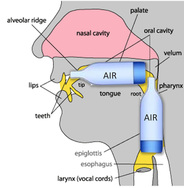 In order to increase this amount, you need to learn how to stand. Then, you need to engage your ribs and fill them more deeply with air. Lastly, you need to control how quickly the air is exhaled. When you learn to use your resonators properly, which are found in your sinuses and more, many voice talents discover that their true voice is actually higher than they realized.
 It seems like that raspy sound is still popular. Still, just because they ask for it, this does not mean you have to provide it if that is not your natural vocal tone. When we speak, our vocal cords vibrate and bump into each other to create sounds. When this happens, we can get nodules. Then, the vocal cords don’t open and close properly. To prevent rasp, there is an exercise you can do:
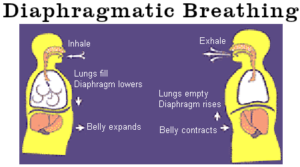 One of our attendees asked a question about promo reads. He said that when he tried to get deep resonance he loses his breath. Michelle confirmed that he stands and he said yes. She directed him to put one foot in front of the other. Then, he was told to tuck his bottom under to expand the back ribs. Michelle said that as he releases his breath he needs to control it and let it come through more slowly. She then told him to do the above exercise in the tucked stance, letting the air flow in and out like a balloon.
 Like with other genres of voice over, actors have to make a choice. Directors give input and Randy works with that. Randy shared an anecdote about her late, great friend Chris Corley. Chris is well-known for being the voice of the MLB network, movie trailers, imaging, and more. Anyway, once auditioned. He was cast in this role. Once hired, they told him his read was not what they wanted. But, he was so committed and they loved that commitment to the read. The choices we make when we read and the characters we choose matter so much across genres.
 Fast forward quite a few years. Now I have the luxury of having a weekly Clubhouse Room, “Ask the VO Coaches.” This week voice over legend Scott Parkin was our guest! Whether you know it or not, you likely know Scott! He is the voice and face of many recognizable brands as he does both voice over and on-camera work. He actually started out on morning radio. Scott has a national Tide TV commercial and many more. He has also made appearances on well-known shows like “Grace and Frankie.” Scott finds that the relationship between VO and on-camera work is symbiotic. Scott shared that most of his work comes in through his agents at DPN. As a single dad, his daughter Miranda grew up socializing with other talents in the DPN waiting room.