It’s not A Hobby…
 What makes a professional voice over actor a professional? Well, besides the years of training, the demos, the home studio, and being a part of the community, a big, big, big characteristic is booking PAYING work at INDUSTRY STANDARD RATES. Not Fiverr. Not bargain basement, but once a voice talent begins earning a consistent, sustainable income they proudly earn the title of professional. If they are booking repeat gigs or lots of gigs, they now have the goods to call them selves a pro. Even in WoVo, our professional organization, once you book five gigs at industry standard rates, you are eligible to apply to be a “Professional” member. Thus, it is the act of being paid for the work that you do that is essential.
So, you wouldn’t think that being paid would be so tricky, right? You book a gig, your record your amazing audio in your professional studio, you deliver your audio, and the client pays you? That’s how it should work. But often, too often, it does not play out that way. This month I was fortunate. Almost all, about 80% of my bookings, were paid within 24 hours if delivery. This is not the norm. This blog post is inspired by a less than kind client who although pleased with the work I did, and cast me in repeat commercials and campaigns in the last two years, acted as though he was giving me some sort of loan when he paid his invoice at about 90 days past due. This is simply not acceptable. His total lack of professionalism is appalling. I should not have to explain myself, and neither should you. So, instead of focussing on the exception, let’s focus on why things typically run smoothly and how to create a system that makes it easy for a working talent and for your clients to pay promptly:
Terms Up Front
When I book a job I send a “Seal the Deal” email. This email is extremely detailed and clear. It has multiple components, all of which are important:
- It thanks the client for casting me in the “Name of Project.”
- This confirms the casting.
- It confirms the details they want including specifics about the recording and any requests for tone, style, etc.
- It covers details about guided sessions/phone patch.
- It confirms the rate.
- It confirms my revision/pickup policy.
- The end of it also has legal jargon making this email an agreement. This is how all of these emails end:
Warm regards,
Laura
Acceptance and jurisdiction: Acceptance of this proposal constitutes agreement that usage rights are limited to the medium and region listed in the job description, and expansion would require renegotiation of these terms. Your acceptance of the above constitutes a contract which – in case of a dispute – you agree will be adjudicated in, and according to the relevant laws of, NY, USA. If the booking is cancelled, the session fee will still be paid in full to Laura Schreiber.
Stating your terms in the initial email is essential. The bigger the job, meaning the more money it pays, the more essential it is that you state your terms up front as you have more to lose.
Invoicing Made Easy
 AKA “Invoicing for Dummies,” I want to make it as easy as possible for my clients to pay me. I actually spent years figuring this out, so the client is not the dummy here, I had about a five year learning curve. I tried multiple different ways of invoicing, and find that this system is much more user friendly. I use Fresh Books for my invoices. They are clear. They state my terms which are Net 30. They allow me to set 30 and 60 day invoice reminders.
When I send my finished audio, the last paragraph is always all of the invoice information. Always. It tells them the invoice number, what is due, and the multiple ways they can pay me. Different people prefer to pay in different ways. Do I have a preference? Yes. But it doesn’t matter, I need to make it easy for them. So, in the last paragraph of my invoice I tell them:
Lastly, you will receive a Fresh Books invoice #XXXX for the amount of $XXXX after this email. If you prefer another means of payment, I also am happy to receive payment by check at XXXX Road, South Orange, NJ 07079; via paypal at laura@lauraschreibervoice.com, or at Zelle and Chase QP at laura@lauraschreibervoice.com. Thanks so much again for your business and have a great day,
This email is easy to find. The invoice allows them to pay. This allows them to pay. It’s clear. It’s simple. It’s easy to find again. Make things easy for your clients!
Session Vs. Usage in Invoice
 This is extremely important: when invoicing, always, always, always differentiate between your session fee and the usage of your voice. Why? Well what if Sally at the ad agency decides after multiple rounds of casting and telling you that you were perfect 24 times that in the end she really wants a more robust male voice? No problem Sally, she just has to pay your session fee. This is industry standard. I repeat, this is industry standard. You have done the work. You have delivered the work. The session fee is the fee that they are paying for you to get behind the mic and turn on your phantom power and record. If you did a live session? Guess what, they are paying for it. The usage is for the usage of your voice for the run of the spot. Do not book gigs in perpetuity. It is a huge problem. That is a separate blog. Just don’t!!
Some People Are just Nicer than Others
At the end of the day, some people are just nice and intend to pay you and some are not nice or are totally disorganized. Some are both. I had a government job this week that had a low budget but payed within an hour of delivery. I was doing my happy dance. I have had similar jobs that take 90 days to pay. I typically find that some clients just cannot pay on time. Some always will. Try not to let the few who are really unkind ruin your state of mind for the rest who really are good folks.


 When I started out in voice over years ago, I was told that the ups and downs of the industry are can be described as “feast or famine.” I was cautioned to always set money aside for the slow times, and I always thought about the ebb and flow in terms of the finances. The flaw in this thinking, sound though it may seem, is that when the feast comes, and the voiceover g-ds shine down, it’s not the money that we have to worry about, it’s having enough hours in a single day as a working solopreneur to get the work to our clients in a timely manor. In fact, it’s more that that. Here are some issues that come up when the work suddenly pours in at once as it often does:
 So, again, there is a difference between meeting your financial goal and a ton of working flooding in on a given day. I am talking about the latter, which makes the former possible, and is an entirely different ball of wax. Sometimes days go by with little work, and then all of the sudden, you might face the scenario that I faced on Wednesday, when as much work as I typically do in an entire week came in one day. I have a system when work comes in which involves entering the job into my CRM, carefully reviewing the script, preparing the invoice, recording the work, and then preparing a thoughtful delivery email, and that system is great when I have unlimited time.
 I’m a pretty happy and upbeat gal, and I am genuinely appreciative of each and every one of my voice over bookings and clients, but that doesn’t mean that I don’t have to work hard to create a routine that fosters this attitude of grattitude so that the folks I work with know without a doubt how appreciated they are! This time of year is one of my favorite times of year! Not only do I get to spend more time with the people that I love, but it is also a great time to give a little something extra in the way of thanks to those who help a small business thrive! As a solopreneur, I love these special moments and find that they make all the difference!
 If you have not made it clear that you are not in your booth, do not leave them guessing. Make it as easy as possible for your clients to get what they need when they need it!
 Since I am almost always sending gifts to an office, My husband typically gives his opinion as well, since Harlan actually works in an office. Harlan is of the strong opinion that clients want food, particularly sinful food, and that they would not indulge in on their own. So the past few years specialty food like fudge from the Jersey shore and high-end candies from Sugarfina have made the cut. I have something very special planned for this year.
 IpDTL was the first method I ever used to connect. My very first coach, Anne Ganguzza, used ipDTL for all of her sessions. So, I was very comfortable with this when I launched my business and proud to offer this to my clients. Around the time that I opened shop, I had two agents who said they would sign me if I had an ISDN line. I learned that it was no longer possible to get regular ISDN lines in my part of New Jersey. So, I use an ipDTL bridge to ISDN. I have my own direct number. Initially I was thrilled. I always test connect before a session. I have had more than one snafu. To his credit, the creator of ipDTL is very available via facebook and tries to address all issues. There is, however, a considerable time lag as he is across the pond and he never figured our why my hiccups happened. I have been fine with my regular ipDTL service but I am less than confident in my ISDN service. I will say that when I send my clients an ipDTL link and they have never used it before, they are always very impressed with how clear the connection is.
 I have been very pleased with my Source Connect service. The funny-not-so-funny story is that I had to sign up for it when I had a session scheduled and my ISDN line would not connect! The producer was very kind and said it happens often and that we should try this. I work with a lot of producers now who love Source Connect and it is easy. Last week, I had a commercial session for a TV spot. There were four talents on the line at the same time. The producer had the clients in the studio with him. He actually sent as a Source Connect Now line. It was great. If you have never used this before, just don’t be shocked that if the others are not muted you will hear a slight echo. Once they mute the echo goes away and it does not effect the recording. There are also not typically latency issues with Source Connect which I really like.
 I have some clients who love to use Skype and Zoom. I link them together, I suppose, because anyone could use them for anything, even outside of VO. If you are using them for voice over, be mindful to check your settings and be sure that you are coming through your pre-amp. Both of these are easy to use and for zoom if your session is under 45 minutes they are free. Skype is free as well. I find that my clients in Europe and Asia LOVE Skype and love to message on Skype! So, if you work with folks on Skype, remember to check your messages from time to time.
 Funny as it sounds, I have some older Baby Boomer aged clients who just want to be on speaker phone! They do not like anything “high tech” and they want to keep it easy. If you are like me, your mobile phone may not work in your booth. That’s ok. I have a Magic Jack line for my office and that gives me a landline phone that I can bring in my booth. It is inexpensive and reliable.
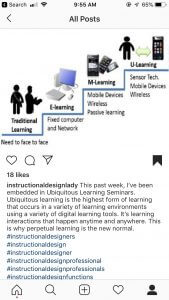 Today, I see my children sprawled across their bed surrounded by multiple devices. They read a lot but they only read books when a teacher gives them an actual book. Instead they read on many devices, seemingly at once. They will have their phone out, their computer out, and an iPad out, and they will be working on multiple screens getting input from all of them. To say that I am both baffled and simultaneously concerned about them getting cancer from all of the electronics is one thing, but the point is, as someone who deals with eLearning content all of the time, that this generation absorbs content differently than Gen-Xers.
 A few years ago I started to notice a big shift to mobile learning. I attended an eLearning Guild conference in San Diego in June of 2017 and the entire focus of the conference was on everything mobile! Now companies could train the employees anywhere, anytime, and why not have fun in the process. Gamification became a big buzzword. At that point, we went from just being narrators as voiceover actors, to really giving the content creators and instructional designers the characters for the roles that they needed.

