Sometimes things Go Sideways
As a well-established professional voice actor I wish I could say that when I recorded my first audiobook everything went well, but that is not the case. I learned quickly that narrating audiobooks is vastly different than recording a 30 second spot. Actually, the recording was fine. I marked the manuscript on my iPad just like Sean Pratt taught me. I used iAnnotate and I was proud of how the audio and the editing when. The snag happened quite unexpectedly when I uploaded my audio to ACX.
Learning the Ins and Outs of ACX
If you have never used ACX, when you upload your audio it has a tool that immediately measures the quality of your  audio. So my audio was immediately flagged as being insufficient for their needs. You get a little orange or red, depending on the screen settings of your monitor, triangle with an exclamation point in it. ACX is kind enough to tell you precisely what is wrong with your audio. In my case, my RMS, or Round Mean Sound, levels were not within the precise range of -18 to -23. Mine were between -25 and -27.
First I called an engineer I work with regularly and he had gone to both college and graduate school for audio production and he had no idea what an RMS was. I sent him a photo of my audio because I could see there was a meter for it in my DAW, which is Twisted Wave. His best guess was to play with how I normalized it. No dice, nothing made this better. And I had already applied my commercial effects stack to the ENTIRE recorded book. At this point the only thing I had going for me was that I had saved the RAW audio. Note, ALWAYS save your raw audio!!
The Meltdown
So at this point, dinner was not being cooked. The audio couldn’t be uploaded. I was in my booth in tears. For someone who has been in VO for years, I was loosing it completely. Just then, I happened to have been, over several days emailing back and forth with Jack de Golia. I had questions for him about some programs I could use for audiobooks, and I had the luck of getting an email from a friend at that moment.
I told Jack I was having a meltdown. Jack phoned. He asked what was going on. He talked me off a cliff. He also showed me how to use the analyze function on Twisted Wave which I never knew was there. Jack actually showed me quite a few thinks that night.
He told me I needed to call George Whittam and that I needed a stack specifically for audiobooks. The only way to meet the A CX specs is with such a stack. I had no idea. The thing is, you don’t know what you don’t know until you’re in the trenches. I did in fact reach out to George. I paid extra for the stack, and I was very quickly back in business.
When I had my Meltdown, I had people to call
I was lucky, the right guy happened to reach out precisely at the moment I needed him. If you don’t know Jack de Golia, his is a brilliant voice talent best known for his work in eLearning and Audiobooks although he excels in other genres too. He is a coach as well and is based in Las Vegas Nevada.
So let’s dissect why I had a friend like Jack in the first place? Jack happens to be a really nice guy, and exceptionally good at what he does, so he’s easy to be friends with in the first place. But how did I maintain the friendship on my end? Well, I have made the effort to go to voice over conferences for years. I had attended Jack’s sessions at past conferences like WoVoCon. When I would go to other conferences like DevLearn in Las Vegas, I kept in touch with Jack and we had lunch. Over the years I also sent correspondence emails because his friendship and the friendship of my industry friends is extremely important to me. I did not have a crystal ball and I had no idea that Jack would one day come to my rescue, but I did know he was a good guy and I valued having him, like so many others I have been blessed to meed in my life.
The Take-Aways
I can tell you that while we all work alone in padded foam booths, we are stronger together than we are apart. Whether we are two months in are ten years in we always need good, smart folks who have our backs. It is worth making the effort to spend time with people on your visit. It is work keeping in touch with people beyond the reach of social media. Make actual friends. It is so important and it is what will make all the difference.
 Interestingly, an early morning text from my nutritionist got me thinking about why positivity matters so much. At the end of her text, which happens to be the first text of my day, it said “No effort is too little in the big picture. It ALL adds up to progress. Keep your eyes on the goal and have a glorious day!” That is how my day started. Who wouldn’t feel great after such a message? And this got my wheels turning about the importance of what I put out to my own VO students. I am someone who has always responded well to positive reinforcement. More than that, I thrive on it. Feedback with a positive spin is something I can run with. Conversely, when I feel criticized or scrutinized I do not perform well. I have studied the psychology behind this in graduate school and in professional development workshops as a teacher, and I try to bring all this with me pedagogically when I coach. I do believe that for voice over students to get the most out of their experience they need positive reinforcement.
 Before working in voice over, I actually taught middle and high school history at an all-girls school in New York City. For one of our teacher in service days, we had a neurologist come and talk to us about positive reinforcement. Did you know that there have been studies that prove that people respond better when their papers are marked with green pen than with a red pen? Further, students to respond better to encouragement to improve and build
 I cherish building close relationships with people I work with. In the past few years, I have been come close with a “client” named Steve. First, I got to know Steve when he owned a production agency in Portland. Then, he opened a boutique talent agency. Over time, Steve became a close and cherished friend. When Steve opened his agency he actually decided to refer talents who needed coaching to me. Why? In addition to the curriculum I developed, he liked my positive way. Even recently, while in a period of transition onto a new path in life, Steve asked me if I would direct a session for a client because of my positive way. The point is that people need this kind of support and vibe, it makes it easier to work together.
 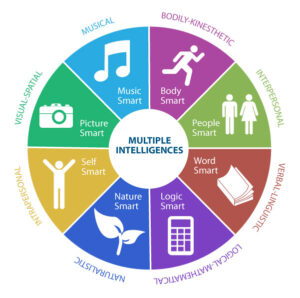 When I was in graduate school we also spent a lot of time learning about Howard Gardner and his theory of multiple intelligences, that different people learn and absorb material in different ways. I can tell you that as I get older I think the way that I myself learn has changed. But, the way that I relate to people and connect with people has only changed in degree and not manner. I would say that I am perhaps more sensitive now, than when I was young. I am a delicate soul, and especially something as personally as our art, well, we are all unique and while there are industry standards and benchmarks we need to meet, I would like, myself, to learn about it in a meaningful and engaging way that brings out my best, and is not belittling.
 When I first heard about the sales funnel for voice over, I was elated. Basically, their funnel drew me in and it worked instantly. I had several thoughts. First, I loved the idea of paying less for pay to plays. I thought by starting a funnel I could change my pay to play strategy. To be clear, I do not think there is a voice over reality in which pay to plays cease to exist, I simply wanted to be less dependent on them. Next, I loved the idea of positioning myself to be found by the people who were hiring me. In all my years as a full-time actor, I spend A LOT of time doing direct marketing, and we all know this can be a craps shoot, a big roll of the dice. The sales funnel was appealing because I had hoped that through the marketing expertise of the folks I hired the people who needed me would find me and I could focus on what I love to do most, recording and coaching. It sounds great, right?
 While working with Rob and Mary was as expected in terms of their bed-side manner, and they were responsive and kind, Rob over-promised and under-delivered in terms of the result of the funnel. It was actually shocking. We would look at the same numbers, and they would have a completely different analysis of them. Keep in mind the funnel was supposed to bring in dream clients with large budgets. It was supposed to weed out the undesirables. This was NOT my experience. My experience with the opposite. My dream clients were no where to be found. I had multiple people sign up for calls and not show up. I sent follow up emails and texts to those no-shows.
  I had an experience recently and after the fact realized that dog painting is actually a great analogy for life as a voice over actor. If you follow my blog, then you know that I have two precious studio dogs, Violet and Daisy. Last week were were invited, with the dogs, to a charity event at my brother-in-law’s temple. The event was in support of our local food pantry, and we were going to do dog painting. Yes, that’s right, dog painting. Felix, my BIL, works with a guy named Jason to run the arts committee. Inspired by a Jackson Pollock painting done with chicken feet, they opened it up to community pets. The plan was to have people paint with their pets, make a group mural, and bring pet-specific donations for the food pantry. Often those who cannot afford food for their family, also cannot feed their pets. My daughter Emma signed us up and we brought dog food and treats to contribute. Even the morning of the event, I was very unsure of what we were walking into.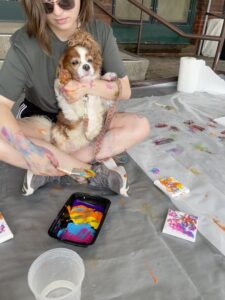


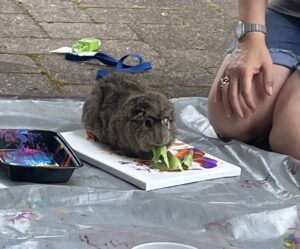
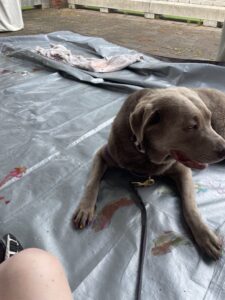 So, I see many parallels between dog painting and VoiceOver. Like the event, in VO there is no roadmap. We wake up each morning not knowing what to expect. We walk into live sessions and we don’t know how long they will be and what the folks will be like. Like the dog painting, there are no guarantees in voice over, no promises that things will work it. It might be fine, but everything could also have fallen apart completely with no hope of salvation. We have no crystal ball and we have to be prepared for any outcome.
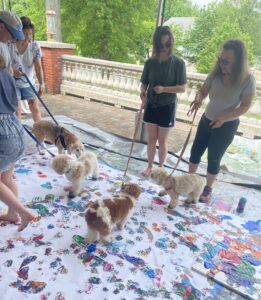 I never thought I’d go dog painting. But I did and I loved it. Not only did I have fun with my pooches in the moment, but I gained valuable life insights and a refreshing perspective on being willing to try new things. Sometimes, even if you have doubts, as longs as what you are considering is safe, it’s worth trying!
 Learning to actually incorporate breathing was hard. Voice actors need to learn how to breath and when to breathe. But being told to breath from your diaphragm and then automatically doing it at all the right places in the script are two very different things. That’s why this week fellow voice over coach Diana Birdsall and I invited Michelle Blenker into our Clubhouse room “Ask the VO Coaches.”
 We were eager to ask Michelle about vocal fatigue. Whether you are auditioning or doing booked work, often your voice feels tired as the day goes on. Our voice is a delicate instrument, Michelle explained. She said our entire being is used when we do voice over. We use our body but our vocal cords take the brunt of what we do so we need to use our whole body to support them. As we bring air into our larynx, we want the air to float through and we don’t want to push air in. She suggests that we reframe our thoughts about where our voice comes from and focus on the diaphragm.
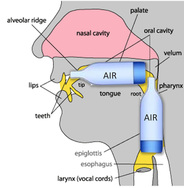 In order to increase this amount, you need to learn how to stand. Then, you need to engage your ribs and fill them more deeply with air. Lastly, you need to control how quickly the air is exhaled. When you learn to use your resonators properly, which are found in your sinuses and more, many voice talents discover that their true voice is actually higher than they realized.
 It seems like that raspy sound is still popular. Still, just because they ask for it, this does not mean you have to provide it if that is not your natural vocal tone. When we speak, our vocal cords vibrate and bump into each other to create sounds. When this happens, we can get nodules. Then, the vocal cords don’t open and close properly. To prevent rasp, there is an exercise you can do:
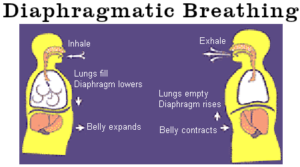 One of our attendees asked a question about promo reads. He said that when he tried to get deep resonance he loses his breath. Michelle confirmed that he stands and he said yes. She directed him to put one foot in front of the other. Then, he was told to tuck his bottom under to expand the back ribs. Michelle said that as he releases his breath he needs to control it and let it come through more slowly. She then told him to do the above exercise in the tucked stance, letting the air flow in and out like a balloon.
 We love to talk about our CRMs. Building client relationships is another hot topic. A few weeks ago Robert Sciglimpaglia started talking about
  sales funnels for voice over. Diana Birdsall, fellow VO Coach and I got super excited. Why? After years of emails and LinkedIn outreach, sales funnels are different. And why work with Rob and his daughter Mary Brainard? Put simply: they are fantastic.
 A sales funnel is a fancy word for a sales process. If you picture a tube or a pipe that is wider at the top and narrow at the bottom, that is what a funnel looks like. In a sales funnel, as people move through the funnel, there are more people at the top and fewer at the end. This is because not everyone wants or needs you services at the moment they are pulled into the funnel. You can work to maintain contact with all who have come into the funnel through follow up emails, calls, and social media. Also, it came up in our clubhouse chat that funnels should really be used for experienced voice actors who have their business up and running. If you are new to VO and just starting out, this is not the system for you. You can try this once your booth is set up, your website is up, and you are ready to seriously invest in your business.

