Why Voice Actors Need a Policy for Pickups and Revisions
As a full-time, professional voice actor, I love working with repeat clients. I love delivering finished audio I can be proud of, and over the years I’ve come up with a few strategies to reduce the number of pickups I have to do. It is important to understand the difference between pickups and revisions, and how live sessions come into play.
Just What is a Pickup
A pickup implies that you, the voice over talent, have made an error, and typically any and all performance errors are covered by the actor regardless of the size of the job’s budget. This could mean that you misread the script, it could mean that there is an odd noise in the recording and it is obscuring your work, or it could be a performance error. Perhaps you were meant to sound calm and relaxed and the client feels you give off an agitated vibe. Any of this constitutes a pickup. When I book a job, I do ask clients to give me the courtesy of asking for pickups and deliveries within 48 hours of when I give them the finished audio. Most do. Some don’t. How flexible you want to be is up to you, and makes a difference in how you feel about your relationship with the client.
What is a Revision
A revision is different than a pickup. A revision implies that the client has changed the script. Typically this means that they got your VoiceOver audio back, reviewed it, and then decided to make tweaks. For me, for jobs over $250, I include one round of minor revisions which I define as less than 20% of the script within 48 hours of delivery. If it is after 48 hours or more than 20% I charge $75 per 30-minute revision session. If the revisions are more than 40 percent of the script I adjust the rate. If the script starts to look more than 3/4 different and it is a long narration, then it becomes a new job, and negotiations begin. This is not common. In all my years as a VO talent and coach, the two times this has happened, the clients were upfront about the revisions and offered me a new rate before I even had to start worrying. If you are noticing, they are noticing. In terms of the turnaround with revisions, again, you have to decide what you can live with. For example, I work with some eLearning companies that take quite a while to review their work. For me, this is not a problem and I am happy to wait.
Throwing a Live Session into the Mix
So you have a session for Source Connect, Zoom, or Skype. Wonderful. What should your pickup policy be? Audio from a live session is always final delivery. Period. The session should not end until the clients have what they need. This is the industry standard. If the client comes back after a life session and wants a re-record, you are entitled to a fee for an entirely new booking. Basically, you have made yourself available to however many people from their team are on the call, from the producer, to the creative director, to the folks from the brand. They have plenty of time to give direction, chat, and get all that they need from you. You are not in any hurry. If, after the spot is produced, they decide to take the work in a different direction, that’s fine. They can pay you for another session.
Tips to Avoid Pickups and Revisions
In the end, here are some tips I have come up with that leave me having to do very little pickups.
- On jobs under three and a half or four minutes, I deliver at least two takes. If a client has options, they are less likely to come back to you wanting more.
- I deliver wilds of the end. If there is a talk line, give them lots of options of the end as you would in a live session.
- If there is something that may have an unusual or unexpected pronunciation, either try to call the company and hear how they say it, or fine it on YouTube and avoid having to do the retake for that. If you can’t find it, give them wilds of the word or sentence with different pronunciations.
- Try to review your audio several times before you submit it. If you are new to VoiceOver, this is a reminder that you need to do your editing for correctness to script before adding EQ/Compression/Effect stack.
- If you have a long narration, I actually edit page by page. I go through each page twice before moving on to the next one. I catch my errors and it gives my voice a break.
Ultimately Why Pickups and Revision Policies Matter
In the end, we want our clients to have a great experience working with us. We want them to come back to us over and over again. If we lay out our policies clearly, and there is no room for ambiguities, communication should be seamless. Expectations should be clear. Relationships are built on trust, and when policies are consistent, because there is, in fact, an actual policy, it is much easier for a client to understand what they are being charged for and why.
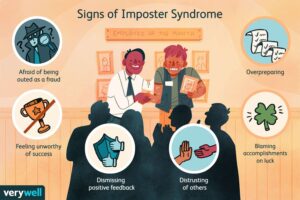 I’ve been a full time, professional voice over actor for quite a while now, but in the past year I started hearing for the first time a new term: imposter syndrome. I started hearing it on social media, on Clubhouse, and at conferences too. I found it surprising because in all my years in VO, I had never heard any other talents speak to this before. What I have learned is that this term refers to the feeling that one does not actually belong, or is not what they claim to be and is, instead, an imposter. Suddenly, in the past year, I am hearing about others feeling this way frequently. It is coming up often in conversation. Perhaps it is because many turned to voice over during covid. Perhaps it is because some start working or trying to work before they are actually prepared. For a multitude of reasons, suddenly I am hearing this all over the place. If you are interested in being a voice over actor, and you really want to succeed and do NOT want to feel like an imposter, perhaps consider my experience, as this has never been an issue for me.
 year, I worked with 4 coaches and took advanced acting and improv at a local theater. I spent sic to eight hours A DAY studying and working on my craft. I worked on scripts. I practiced characters. I recorded. I edited. I submitted to my coaches. I listened back to my assignments. I did research and followed prominent voice actors to see what they were booking. I took multiple private lessons each week. I was in group classes with GVAA. I had practice partners. I met with those partners. I did homework for those partners too and I took each and every assignment so seriously, as if my life depended on it. So when I say I had lots of training, that is just when I started out. Since then I have continued to have lots of coaching. Have coaching is the foundation of all we do. I think by the time my website launched, I was so ready to work that it never occurred to me that I was not prepared to serve my clients.
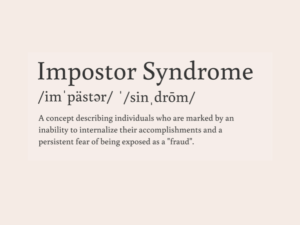 Both as a student of voice over and now as a professional, I have always put in extremely long days. From morning to night, often going back into my booth after dinner, my days are long and rigorous. Sometimes new talents ask me when they will start booking. They tell me they have submitted 50 auditions. I try to keep a straight face. I typically submit more than 30 auditions in a day, even now, so 50 auditions is in no way impressive to me. I have often heard of the rule of 10. I believe that Gaby Nistico has even made a video about it. If you work 10 hours a day more than 10 months a year for 10 years that is when you start making six figures… Well, I believe there is something to this. I have always had the luxury of being in voice over “full-time.” Well, let’s flesh this out. What exactly does “full-time mean? To me, it means I maintain standard business hours and I am in my booth al day every day to serve my clients. The more you are available and the more you record and submit, the more legitimate your business is.
 When my business launched, in audition to lots of coaching and sweat equity under my belt, my first website helped establish my identity. I never had doubts about my identity as a professional. I had been told by every coach I ever worked with that even at the start of my career, I should introduce myself as a professional. I did so with confidence. As I get clients under my belt and had testimonials, I felt more proud of what I was building, but it never came from a place of doubt. I was certain that I was building a great service business that would help my clients get what they need.
 Of course this chat with Gwen about our health made me draw a parallel to voice over and think about how easily it can all be undone. Imagine years of hard work and suddenly the ups and downs of voice over just continue to spiral down. I of course thought back to hearing Dave Fennoy, world famous voice actor best known for his video game roles, who I had the privilege of hearing speak for an entire day back in 2016 at a conference called VO Revolution. Perhaps it was his lack of pretension that got me, but Dave talked about how after a few big bookings he thought that he had made it. He shared how his business peaked and then plummeted. He advised working as if every day is your first day in voice over and warned that if you don’t you can lose it all. I carry this with me. This has always had my wheels turnings. So, if all that we have worked hard to build can slip aways so easily, here are some of my best tips to lay a strong foundation for your voice over business:

