Getting Started in Voice Over
When people come to me for voice over coaching, they are at all different point in their VO journey. Sometimes they are quite experience but many are totally new to VoiceOver and are making the bold move to pursue their dreams. Building a strong foundation is extremely important, and my production partner Dave Scott and I work really hard to help our students learn things the right way from the start. Still, whatever regardless of when you plan to do your demos, it is really important to start practicing on an actual microphone with a preamp or interface in a studio setting for several reasons. Here are some thoughts to consider:
Learning Mic Technique
 Good microphones are powerful. Whether you are starting out with middle of the road mics like the Rode NT1 or the Cad Equitek E100S, or investing in a more expensive microphone right away like the Neumann TLM 103, these microphones are condenser mics and will pic up all the sound in a large radius around them. You need to learn proper technique to best enhance your sound. Also, technique varies by genre. The way I work with my mic for conversational commercial reads or intimate reads is different. When I do video games I move around a lot and often back away from the mic, especially when I am shouting and doing effects. These are all skills I was taught and worked hard to hone, I did not wake up one day and just know how to do it. It takes time. And you do not want to walk into a studio for a job or worse for a booking and not have the skills necessary to rock that session!
Form Good Habits
Put simply, lessons are expensive. When you pay for a voice over coach or take a voice over class online, you are investing in yourself and your career. Whether it is the time spent with the coach in sessions, the time spent doing your homework in between sessions, or for daily practice, you need to be establishing good habits. You simply cannot do this without the pro equipment. You need to set up your studio so that you can prepare to be a professional. There is only one way to do this and you need to master your technique early on so that it is seamless when you launch your business.
You Might Have Diction Issues
No one in VoiceOver wants to have speech issues. Speech issues that I have had to deal with as a voice over coach range from diction issues, regional accents, articulation issues, plosives, and sibilance. If you only record on your computer and submit, it can be really hard for your coach to pick up some of these, or pick up the severity of some of these. Imagine speeding months coaching, getting ready for demo day, going to a pro-studio, stepping in front of a U87, and your coach hears a major diction issue they never noticed until demo day. What a disaster! This can, however, be easily avoided simply by setting up your professional home studio and working with your coach on real recording equipment.
 The other side of this is that you need to become a critical listener of your audio too! You need professional headphones, or cans as we call them, that do not have a filter in them. You can not really hear how you sound without them, and you can not really hear what clients will hear or be listening to without them, so this is essential to your training!
You Need to Practice Recording and Editing
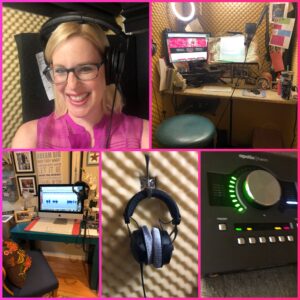
When you are working with a VoiceOver coach, you need to practice recording and editing they way you would when you would submit for an audition or a job. You can only do this if you have a functioning booth with a microphone, preamp or interface, computer with a DAW, and good cans. You need to practice editing your audio every day so that you get used to the ins and outs of your DAW and become efficient at producing pristine audio. Nothing else will suffice in this business. And it does not happen overnight, believe me!
Conclusions
I hope this has helped you better understand why you should not wait to set up your home studio! Timing matters a lot. While budget plays a factor for most people, even with cost in mind we can work with you to help guide your choices as your start to big gear for your home studio. It’s better to have it ready and get going and be well-practiced when your launch your business. For those of you thinking that you might get coaching, do your demos, then build your booth, that is not advisable. Read the blog again and re-think your plan! Now, best of luck in your VO journey!!
 It happens, even in the time of covid, we leave our studios. As a professional voice talent, we have work we can predict, and the joy of work we cannot predict, that comes in at a moment’s notice and can have a pretty tight turn around time. As a working mom, whether I’m home or traveling I’m always juggling my responsibilities as a small business owner and my role of a mom, this year more than ever. This year, my high school juniors are looking at colleges. And as if looking at colleges for twins is not challenging enough, their interests do not overlap at all. Emma is targeting schools with Speech programs and STEM programs. Jack is looking for International Relations and Russian. So, we are doing two completely different college searches at once. What does this mean for me as a voice actor? It means I’m leaving the booth for the first time in a year and I need to be prepared. Voice over work should never prevent travel, it just means you need the right set up for your voice over travel rig and to take the necessary steps when planning.
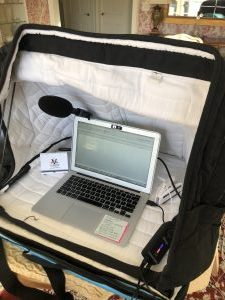 The point of the travel rig is to sound like you sound in your home studio when you are on the road so that you can provide clients with a continuity of service. I have tweaked my rig quite a few times over the years, and finally invested in a quality set up that I am pleased with. I now bring:
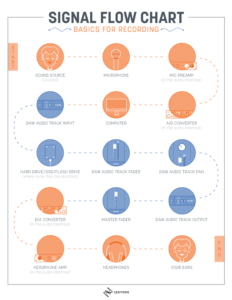 Depending on which voice actor you ask, you’ll get a different answer to the questions “What’s the best DAW for VO?” I have used Audacity, Adobe Audition, and Twisted Wave. I may be proficient in all of them, but I LOVE Twisted Wave. To be clear this does not mean that other DAWs, from Reeper to Pro Tools don’t have immense value, but for me, I am quick and good on Twisted Wave. It serves my purposes well. And when I have a client who needs total production with music, I hire a professional engineer to mix it down anyway, so I really can do all that I need to do on Twisted Wave. Some of my favorite features are the shortcuts, multiple effects stacks, and ease of file splitting.
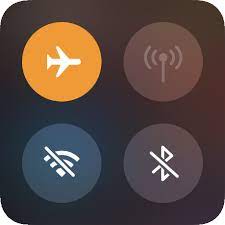 When I am in my booth, I turn my iPhone and Apple Watch to airplane mode. I do this because when I develop a good flow, I do not want the phone ringing to interrupt me. I do offer one word of caution: if you are doing a live session and you coincidentally cannot connect with your client, and have all your devices in airplane mode, it can be quite frustrating if they are unable to reach you. So, while you may not want your phone in the studio for a directed session, perhaps before you silence everything you should make certain that you connect.
 Like many in voiceover, I am constantly revising my business plan, shifting my focus from commercials to explainers to elearning to targeting specific industries. As I revise my plan, my goals change. While I have a planner or agenda that I love, I find that mapping out my strategy for the week helps me to keep my mind on the big picture. As auditions and work pours in, it’s easy to get caught up in the little things and push off the tasks that we think can wait, but in doing so, in pushing off those marketing emails and that LinkedIn outreach, we are pushing off the pursuit of our longterm goals. It is so important to always have an eye on your “why.” If you lose site of that, and you are just buys submitting audition after audition, you can easily get stuck in a rut.
  If your fan makes noise,

