Recent Negotiation Examples
As a working, professional voice talent, one of the aspects of my job that I dread is negotiating rates with clients. When I think about “living the dream” part of the dream of pursuing my passion for voiceover as a talent, coach, and demo producer does not involve the back-and-forth banter to iron out a rate before a job begins. Yet, this banter is becoming more and more necessary as the days of jobs with desirable rates simply arriving in my in-box seem to be fewer that past years.
 Let me share two experiences that happened in the past week. Last week, I heard from an Indie Video Game producer that I worked with in 2016. They were offering me the same role I played then. I had detailed notes in my CRM that they needed a discount as they were trying to launch the game with a kickstarter campaign. When I quoted them this time a normal, mid-range rate, they came back to me saying they were shocked that my rated had gone up. They went on to say that the five other talents had agreed to the rate they offered and they wanted to pay everyone the same. I referred them to the GVAA rate guide, which I will discuss later, and reminded them of the terms of 2016. They came up to my rate for me and for the other talents.
On Friday at the end of the day I client I have done quite a few TV campaigns for sent me two scripts. The rate for both was pathetic for one. It was clear he wanted a buy out, meaning he expects usage in perpetuity, which is never good for voice actors. I responded saying that I’d love to help but that the rate won’t work. I sent some suggestions their way, and said that we need to find a rate that is fare for both of us. My hope is that tomorrow we can work something out and that I don’t have to walk away from a long time client. I cannot, though, work for the rate offered. Maintaining industry standard rates matters for multiple reasons, not just for you as a solopreneur working to make living, but for the some total of our industry as a whole.
If We all Accept Lower Rates, Will Only Get Lower Rates
 Imagine a scenario where we all just stopped negotiating. Let’s say a client offers $200 for two TV commercials with no mention of the length of usage, and instead of trying to negotiate, sort out the details, and explain why buy outs don’t work for us, we all just said “sure.” The implications would be staggering. The clients, then, would assume there is nothing wrong with this sweat shop pay, and would assume that our years of coaching and on-going professional development, that our expensive studio equipment, that the service we provide, that none of it has value, and that the can continue to lower and lower the rates. Where will it end? How low will they go? I shudder at the thought, and fear that if we are not willing to walk away, these bargain basement rates will become more and more common. You must know your worth and be willing to stand up for it.
Sometimes Client’s Genuinely Don’t Know and Need to Be Educated
As hard as this is to believe, sometimes clients are not actually trying to drive rates down. Sometimes they genuinely have no idea where the rates should be set and it is up to us to educate them. I have had this conversation with many other voice talents, and this is often the case. Often those casting us have never worked with voice actors before. Perhaps they were tasked with hiring a voice actor by someone else, and they know nothing about it. It’s possible, especially in eLearning, that they come from Human Resources or Academia and they know little to nothing about casting. When this is the case, a conversation about rates becomes a wonderful opportunity instead of frustrating and contentions.
Imagine How much Less You would Make If you Took the bottom Number on Every Job
Think about your financial goals for the month. Then think about your financial goals for the year. Then think about that over a three year period. Imagine, then, what would happen if you made 10% less on each job? Worse, what if you made 30% less on each job? It’s not just about having money to live off of and pay bills, at such a large income reduction, it will also effect your ability to save for the future and for your retirement. As solopreneurs, every booking we get matters in and of itself and in terms of building our client base. Each booking also matters for the industry as a whole. We all impact each other’s earning potential.
Where can you find Guides for Industry Standard Rates
If you are looking for sources or rates guides, let me refer you to three:
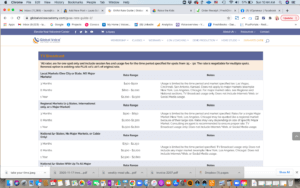
- The GVAA Rates Guide is extremely thorough and covers most of what you need: https://globalvoiceacademy.com/gvaa-rate-guide-2/
- The Gravy for The Brain Rates Guide is very specific, allows you to search by genre and usage, and is also great for EU and UK clients:
- The SAG rate guide cal also be extremely helpful: https://www.sagaftra.org/contracts-industry-resources/voiceover
Think About the End Goal: Earning a Consistent, Sustainable Income
In the end, we all want to earn a consistent, sustainable income. I remember hearing Bill DeWees, one of my first mentor’s in voice over, talk about this back in 2015. Yes! That what I needed, consistency. But a consistent income doesn’t just fall into your lap, it requires a rigorous blend of hard work and a willingness to negotiate. If you can’t stand up for what you’re worth, you’ll never get it.
 While I’ve been full time in voice over since 2015, I did not discover Radio Imaging as a genre or my passion for it until 2017. As a professional female voice talent, I had been booking a lot of commercials and loved my commercial work. I was researching and trying to figure out what else was like commercial work to see what I might be good at. When I found radio imaging, I loved the genre right away because of the energy. In other genres of VO, I often have to dial down my energy and contain my exuberance. I have always found this quite ironic, because authentic is a big buzz word right now in voice over, and I authentically am bursting with energy. So when I found radio imaging, it seemed like the perfect fit and I began actively pursuing radio stations to add to my client roster. I love working with radio stations, regardless of market size, and do my best to meet all budget needs.
 About a week ago I got an email through my website from
  The station is happy. They are extremely pleased and I made it easy for them to get what they wanted and needed. I had a blast working with industry partners doing what I love. For me, even if a station is small, there is still a lot of value in providing them service. My hope it that they will now come back to me as they need more sweepers and station promos. It’s not just providing them quality content that has great meaning to me, but also getting to know my clients and building a strong relationship over time. So while I made them happy with this first go around, now the work of building a lasting relationship so that I can serve them even better begins. With taking feedback, introspection, and hard work, I hope to continue to provide them with outstanding radio imaging for years to come.
 When I started in voice over years ago, I remember thinking that when I had an agent I will have “made it.” I remember Screwing Up is Part of Success”one of my coaches telling me that she worked for five years before she had her first agent, so that I could align my expectations. At that point, I did not even know about managers. I was lucky, I was able to get on quite a few agents rosters pretty early in my voiceover career. As a working professional, I would hear a lot of chatter on social media about various agents and managers and how to get signed, as if somehow getting on the roster would lead to the ultimate success.
 I signed with this manager specifically for the Radio Imaging part of my business in January 2019. Within the first week, I sent him 5 leads of stations who wanted to sign me and wanted to negotiate retainers. The email above was a call I got a week later. Of these leads, my manager destroyed every single one of them. I was not on the calls. I had empowered him to speak on my behalf. The email above “I was told that our station was not big enough for your services.” is a glimpse of how these prospects were treated in my name. Was this the road to the big agencies? No. Worse, when he tried to renegotiate the stations I had, I lost them. There were other odd quirks about the manager. He wanted any auditions to be professionally mastered, which was an added expense. He also sent Sound and Fury auditions, but I get those from other agents, so now I was paying him to get auditions I was already getting. It was terrible. I realized early on and I was stuck. I basically had to stop soliciting all Radio Imaging business or it would be tied to him. Years of hard work and planning came to a screeching halt. Be careful who you pick to represent you.
 They sent me the script and asked for my rate. They needed a RUSH turn around, but I was not charging them an extra fee for that. Since they were a repeat client and I was available I didn’t want to nickel and dime them. Anyway, I made a mistake almost right away. The voice over job I did for them was for an explainer video with usage limited only to their website. I assumed, again, I assumed that this was the same. I assumed this because the top of the script was labeled in bold font “VIDEO SCRIPT.” I initially quoted the job based on the last, recent voiceover work I did for them and the assumption that it was a video.
 On the call, it was great to catch up with the client. As a full-time, professional female voice over actor, building client relationships means a lot to me, and phone calls like this always provide an opportunity not only to better understand my client’s unique and specific needs, but also to get to know them. How better to build a relationship than to actually speak?
 Now, these questions should have been asked in my initial reply email when they were casting me. I should have asked them before I threw any numbers into the air. And as a long established professional voice talent, I should have know better.
 I will never be in such a hurry, even when I tell myself it’s for the client, that I skip major parts of the information gathering process. The point of having years of experience in the industry is not only to serve the clients well and to provide an outstanding level of service, but is also for precisely these scenarios, when years in the industry should teach us to take a breath, pause, and look at what we are dealing with. I realize that if I could make this basic mistake, anyone can. So do yourself a favor, ask questions. Enjoy the dialogue and back and forth. Don’t be afraid to hop on the phone and clarify a few details. I realize the clients in this scenario could just as easily have been inflexible about the budget, and that would have led to a very different blog today.
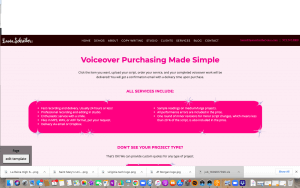
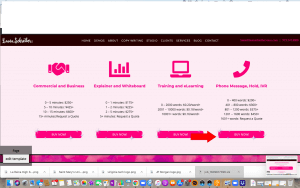

 It’s 2021. We’re still in a pandemic. We need what we need quickly. Laura gets it and she wants you to have perfect audio without a fuss at the click of your mouse. Let Laura know how she can help you!
 Kramer is so excited to make a deal that he doesn’t hesitate to jump at 25%. I think this happens a lot in voiceover, especially with newbies, and especially when times are slow. You have to know your value and you have to know and more importantly understand industry standard rates. First the client asked me for a quote. We had a back and forth that went like this:
 Here, Mr. Seinfeld did not appreciate the value that Kramer was bringing to the table. His perspective was very one-sided. Often clients need to be educated. When Mr. Seinfeld is in the kitchen talking to Mrs. Seinfeld, they only see the value of their product, they show little understanding of the service that Kramer is providing them with his knowledge of the marketplace. In voice over, some clients do not understand why usage matters. This is why it is always important to invoice for both usage and your session fee on your invoice Every. Single. Time. I have other clients who understand perfectly why it matters and what they are paying for but think that if they are in a very small local area or if their client has a smaller budget then none of that matters. In some instances, for folks who are new to casting voice over actors, they do not understand that they are casting professionals with thousands of dollars in equipment, years of coaching, broadcast ready home studios, and all that we have invested in our businesses. So, as a voice talent, you have to decide what you can live with and what you can’t.
 Kramer got good, solid feedback from George. Kramer listened to George. He was inspired by George to go back to Mr. Seinfeld and talk about the terms again. In George, he had a friend he could count on. Who are your industry friends? This is extremely important in voice over. This is no small thing. This is why conferences, holiday parties, and Uncle Roy’s annual BBQ all matter! When I have these negotiation issues I can talk to my accountability group, the ladies of the “VO Powerhouse” as we call ourselves or I reach out to Maria Pendolino and you can actually schedule consultations with Maria to help you bid. I like talking it through with friends because sometimes I need the right words so that I don’t seem like a crazy person. After all, do you want to seem like Kramer when you go back to your clients to “educate”them? I don’t think so.
 Both Kramer and Mr. Seinfeld wanted to renegotiate. But there is a right way to say something and a wrong way, and these two, well…they do not really exemplify a way that a successful small business owner typically will build a meaningful relationship with a client. More than getting the rate that is best for you and best for the voice over industry, you also want a client and not a single gig. If you carry yourself like Kramer, or George, you are not likely to build lasting and meaningful client relationships. There is nothing wrong with taking the time to work through something. This week I was able to get my clients to double their offer. While it was lower than my initial quote, it was much higher than their initial offer, and it is a number I am comfortable stepping up to the mic for. Be positive, polite, and straightforward. Know what you are willing to do and be firm about your boundaries. And then book, book, book!

