Our Clubhouse Panel
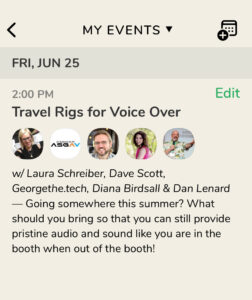 Every Friday at 2 PM Diana Birdsall and I co-host a Clubhouse in our room “Ask the VO Coaches.” I am always excited about our awesome panels, and every week I might say it’s “the best one ever,” but holy smokes was this an awesome panel! This week, just in time for your summer get-away, we talked about travel rigs and what gear you need and what you don’t need to bring with you on that much needed trip. Whether you’re going to the beach, to the mountains, or just to see family you missed during covid, we talked about it all, and we talked about it with some of the best in the field! We had George- the-tech Whittam, Dan Leonard, Dave Scott, and Rick Wasserman. So, here’s a review of some of what we chatted about in case you missed our beyond awesome chat!
What’s the Point
The point of a travel rig is to be able to provide continual service to your clients. If you are booking work daily and earn your income from VO, you likely have or need a travel rig. If you are earning your income from voice over, odds are you provide your clients with good quality audio. The goal is to continue to do that on the road. Can you match your home studio? The consensus was probably not, but you can do your best. Dave Scott, video producer with All Systems Go AV, explained that when they cast a voice talent, they need good quality audio. If they are doing an explainer, and there is likely minimal music behind it, there is not a lof of wiggle room to mask reflections. If they are doing a commercial, at least there is a music bed behind it that gives some additional flexibility. It is always important to be transparent with the client and let them know you’ll be out of the studio, and work from there.
The Gear
So you’re probably wondering what mic and what pre-amp you need? You’ll hate me for saying this, but it depends. It depends on how much you travel and what your budget is. Rick Wasserman also brought up the important distinction between what sounds the best and the “in a pinch or in a pickle” scenario. Ideally, you have time to test your gear and determine what compliments your voice, and you are not recording in a pinch, but rather in a planned and controlled scenario.
There are some great travel mics for your travel rig, including but not limited to:
- Apogee 96K
- Apogee Mic Plus
- Apogee Hype
- Sure MV51 USB
- Rode NTUSB
For travel Preamps, Dan and George were clear to point out that all tested well in their shoot outs, but that they like the:
- Steinberg UR12
- Scarlett Focusrite Solo
- Mixerface
- Rode Ai1
Portable Booth Vs. Pillow Fort
Most traveling voice actors start with the pillow fort. At conferences, we typically all post photos of our pillow forts on social media. So, how do you know if it’s time to make the investment in a portable booth like George and Rick’s Tri Booth or the Vocal Booth to Go? Again, the answer is it depends on how much you plan to work while you travel, how much you travel, and how much you book. If you are just doing it to audition, you would not want to spend the money. If you are, however, booking substantial work daily, one of these booths will come in very handy.
https://youtu.be/lvdIGgVXb9Y tri booth video
During our panel professional voice actor Dave Braxton also joined to talk about recording in a car. He explained that it not only provided the ideal sound proofing, but also offered an escape from his family. While chatting about this, George shared this video from Rode which talks about how to do just that.
https://youtu.be/C6gE2_VdImU
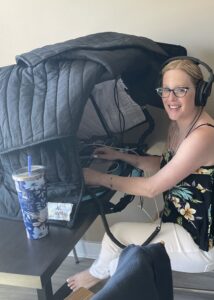 My Rig
My own rig has evolved a lot over the years. I know use:
- a Vocal Booth to Go
- a Sennheiser MKE 660 Microphone
- a UAD Apollo MK II Thunderbolt Preamp
- a Ninja clamp (essential to good positioning of the mic)
My thoughts as a Coach
We talked a lot about on the panel how having good mic technique matters. You have to set yourself up for success and going out and buying expensive gear doesn’t not mean that you will start booking. Once you are booking, then upgrade. Once you have steady clients, give them the curtesy of letting them know when you’ll be our of the studio. Don’t start new projects on home gear before a trip. Always let them know, and plan ahead,
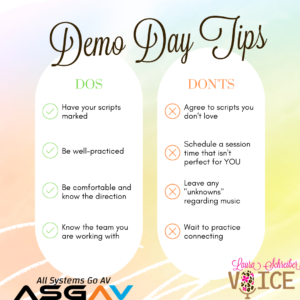 From both sides of the mic, as both a professional voice over actor and coach, I can tell you that how the demo session goes affects how the demo turns out. You’re investing a lot of time, money, and effort. The demo should be nothing short of amazing, and the key to having an amazing demo is an amazing demo session.
 Let me share two experiences that happened in the past week. Last week, I heard from an Indie Video Game producer that I worked with in 2016. They were offering me the same role I played then. I had detailed notes in my CRM that they needed a discount as they were trying to launch the game with a kickstarter campaign. When I quoted them this time a normal, mid-range rate, they came back to me saying they were shocked that my rated had gone up. They went on to say that the five other talents had agreed to the rate they offered and they wanted to pay everyone the same. I referred them to the GVAA rate guide, which I will discuss later, and reminded them of the terms of 2016. They came up to my rate for me and for the other talents.
 Imagine a scenario where we all just stopped negotiating. Let’s say a client offers $200 for two TV commercials with no mention of the length of usage, and instead of trying to negotiate, sort out the details, and explain why buy outs don’t work for us, we all just said “sure.” The implications would be staggering. The clients, then, would assume there is nothing wrong with this sweat shop pay, and would assume that our years of coaching and on-going professional development, that our expensive studio equipment, that the service we provide, that none of it has value, and that the can continue to lower and lower the rates. Where will it end? How low will they go? I shudder at the thought, and fear that if we are not willing to walk away, these bargain basement rates will become more and more common. You must know your worth and be willing to stand up for it.
 When someone brand new to voiceover calls or emails, after our initial consultation, I like to send them an audition script to read to get a baseline idea of where they are starting. From that, I can best assess approximately how many sessions it will take to get them demo ready. Some people are fast learners and they only need a handful of lessons. Others take substantially more time. Here are some factors that influence how quickly you can get to your demo:
 In the past month, I have had two clients with acting and entertainment experience who were new to voice over reach out for demos. Again, both were given baseline reads to asses. Both were amazing. You’d think they’d been in voice over for years. Even without coaching, as one had stage and vocal training and the other had on-camera tv experience, their instincts of what to do with the script lead to a natural, authentic, solid read that would be bookable if they submitted.
  When a working voice talent needs a demo, again, we can move forward with script selection and a process that showcases their range and strengthens their business’ brand. I work hard not only to bring scripts that enable voice actors to target aspirational clients and showcase their capabilities but also to have the demos be a reflection of what the talents value, care about, and matter. The demo prep process is collaborative and the voice talent’s personality and opinion matter greatly.
 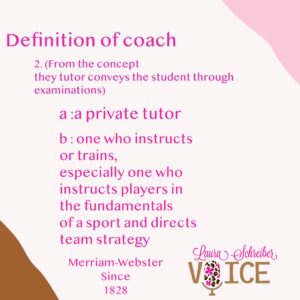 The job of a
 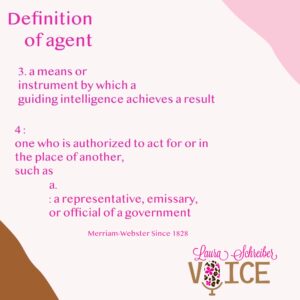 There are talent agents who cast voice actors all over the counts, and they, too, are outstanding for career and rates advice in voice over. A good agent not only secures industry leading rates, they also direct you reads and let you know when you are on the mark and when you need improvement. An agent has both business savvy and a good ear, so if you are lucky enough to be on their roster, work with them! Seek their guidance and build a rapport. You can learn so much for a good agent. Both you and the agent benefit from you learning as much as possible, so they would likely want to help as much as they can.
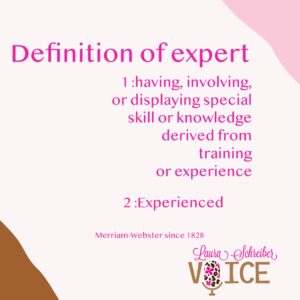 I have blogged before about my accountability group, but I cannot stress enough how much this group has helped me daily to grow my business and make better choices. They have pushed me beyond boundaries I would have never thought to challenge, and they have made me look beyond. I am so much better because I am in the company of these women.
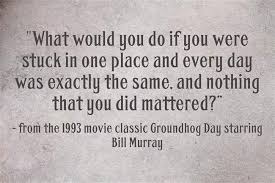 I happened to marry a huge Bill Murray fan, and from Quick Change to Groundhog Day, I think I’ve seen all of his top hits, but Groundhog Day is my favorite. As a working mom, having a system to maintain efficiency is really important but unfortunately that same system often makes every single day feel the same. I go into my booth and warm up. I do my most pressing auditions first. Next I tend to all
  It’s important to pick the right coaches and I’ve been blessed to work with many excellent ones in the years that I’ve been in voice over. Sometimes you want private lessons and sometimes group classes can meet your training needs. Right now I wanted to shake things up. Kim Handysides and her daughter Lisa Suliteanu book a lot of work. They understand what is au courant and have created a curriculum across genres to target bookable reads. Kim has been an industry leader for 30 plus years and her talented daughter Lisa has been working steadily since she was 7 years old and has been full-time since finishing university. In case you’re wondering what the vibe of their class is like, it is upbeat, inspirational, clever, and fun. With so many coaches in the industry at the moment, this class is designed to put voice actors on the path to success and enrolling was a great step for me, even so many years into my career!
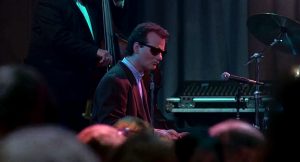 In Groundhog Day, we see Phill Conners taking piano lessons and becoming an amazing pianist. This did not happen over night. It took lots and lots of practice. Right now in The Voice Over Study, we work on different scripts and then can use those tools to go back and really work on a script. The more we learn to unravel it, the better our reads become. For me, having fresh feedback on my reads is helpful. It is also just as helpful to pay attention to the reads of the other voice actors in the class, listen to how they approach the scripts, and think about the feedback that they are given. I try to incorporate this approach into both my auditions and my booked work and bring some freshness to it all.
 In Groundhog Day, we see Phil’s relationship with others in the town blossom and develop throughout the film as he gets to relive each day. For me, having an opportunity to meet other voice over actors is really valuable. The other talents in the class are from different parts of the United States and Canada. We are at different points in our careers and we all aspire to focus on different genres of voice over. Still, I think knowing other voice actors is essential to our success, and I am so thankful to be getting to know the other actors in this class as we all learn together.
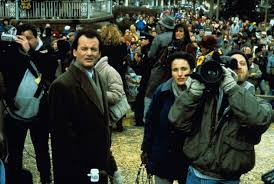 Just as we see Phil repeatedly attempting to cover the story about Punxsutawney Phil, there are countless ways each script can be approached, so wouldn’t it save a lot of time and energy to understand which reads are actually booking right now? That is the point of “The Voice Over Study,” the nuances of the bookable read are not necessarily my go to read, so I am so thankful for the first few sessions already! For example, the words to emphasize or blend may not be what I had thought of, so this valuable feedback, and the reinforcement of it, makes Kim and Lisa’s class outstanding. In class last week, Kim directed me to hit words I never word have that to enunciate, and the overall gestalt of the read was just a million times better. Her instincts are amazing. Kim and Lisa book A LOT of work on their own, and my goal is to be as busy as they are!
 In class we have homework. We have scripts to prepare and we are also supposed to work on cold reading. I also love this, as both make me more efficient and more effective in my daily work. These tasks are something that I look forward to, as I feel like I am taking control of my career and determining my own path.

