Foundations in Voice Over
As an established, professional voice talent and coach, it seems like I made all of these choices yesterday. So whether I am speaking to someone as an industry friend, on Clubhouse, or as a voice over, I tend to hear the same questions about starting a voice over career. Yesterday I had a great call with a guy from my home state of PA and when we got off of facetime, I realized that it was the third time in a month I had a very similar conversation. So… here is the resulting blog post.
I’m Good at Production, Can I Do My Own Demo?
NO!!! I do not say this because I have recently started doing video demos, there are MANY fantastic and brilliant demo producers. If you want to catch the attention of both agents and thus who will book you, I urge you to invest in professional demos for several reasons. First, demo producers have a sense of what current trends are booking NOW. Trends do change. Next, there are certain standards that those who cast expect when listening to voice over demos. Trust them. Lastly, people who produce demos direct your demo session. They will bring out your very best reads and take your best takes, or blend together your best takes to make an awesome demo. They typically produce demos both because of their knowledge of the industry and their ear. You need someone who can bring out your best and push you beyond your own limits. It is amazing what a good director can bring out.
Do I Need to Incorporate?
 This depends on where you live and what your goals are. I happen to be an LLC. I live in the United States and I wanted to be able to bid on government contracts. In order to do that, you have to be an LLC. Being an LLC also protects your personal assets, so there are certain advantages. So, since every one of us as solopreneurs is in a unique situation, whether or not you incorporate depends on both your goals for your voiceover business and your family’s financial situation. Consulting either an accountant or an attorney is helpful.
Do I Need to Be on P2Ps?
 P2Ps, or Pay to Play websites like voice123, bodalgo, cast voices, and others are a great way to bring in business. Sure, there are plenty of voice talents who build their businesses without P2Ps. I am on voice123 and cast voices at present. I have built lasting client relationships from my vast bookings on voice123 and am thankful for the opportunity they present. Cast Voices is new to the scene and is in the launch phase now. I am extremely excited to see what comes of this new platform.
Do I Need a Website to Start a Voice Over Career?
 Yes. While it’s great to be on a Pay to Play or to post audio on YouTube, it’s hard to market yourself to clients with only these options because you are automatically sending them to places where they can immediately find other voice talents. It’s far better to have a website that you set up as your storefront. This is your chance to make yourself stand out and shine. There are a lot of really good people in voiceover, so the question is, why are you different than other talents they could work with? Your website is your big chance to show prospects why they should hire you and look no further. You should have your demos, your contact information, and any stand-out details obviously displayed to make it easy for those who cast to find you and hire you. Your demos on your site should be downloadable.
Do I Need an Agent?
 Agents are wonderful and present you with the opportunity for work. Agents do not guarantee work. Just like with Pay to Plays, agents are a source of auditions. The auditions that agents send are typically more lucrative. The catch, though, is that the competition is much stiffer when auditioning for agents. Agents are far more selective, so it is less about getting on an agent’s roster and more about staying on an agent’s roster. Every agent is looking for something different, but at a minimum, they want to see that you have trained and continue to pursue work on your craft, that you have a professional set up, that you can offer live sessions via Source Connect and/or ipDTL, and that you have solid demos that will appeal to your clients. Building a rapport with your agents is helpful, and doing quality auditions in a timely manner matters a lot!
 commercial campaign, getting signed by an agent, and seeing an old friend. Why is a new demo so exciting? A voice over demo means opportunity. It is a new moment for us to say here I am, listen to this. This is what I can do for you! As a full-time, professional voice over talent, there are plenty of other female voice over actors booking lots of commercials. How do I make myself get noticed? The demo. So who you do your demo with, the coach and producer you choose to spend your time and money with matters, a lot. I have worked with some of the top coaches in the field, and I can tell you that I have had outstanding experiences and I have had experiences hat should have been better. Now that I am work as a
  that show both your range and are appropriate for your brand. If you have dream VO clients, this is the time to include those scripts. So for example, if you are doing an automotive demos, and you love Audi, you would include an Audi script. If you are doing a commercial demo and you love shopping at target, why not include a target spot? The scripts should not simply descend from above on demo day, be handed to you, and recorded. They should be meaningful to you and they should show both your range and what matters to you. They can be an interesting glimpse into your interests too! So, it is very important that you can easily talk to your
  This is really important. Demo producers typically send you their preferred order, but at the end of the day the demo is yours to live with and their preferred order matters less than your preferred order. I personally have had demo producers make changes without any fuss, and I worked with others who refuse to make any changes at all and insist that it must stay the way it is.
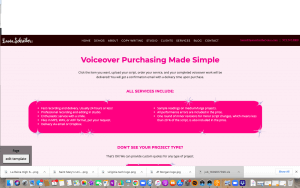
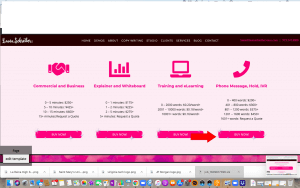

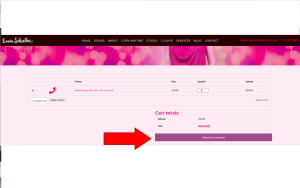
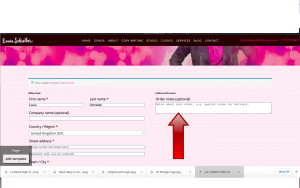
 It’s 2021. We’re still in a pandemic. We need what we need quickly. Laura gets it and she wants you to have perfect audio without a fuss at the click of your mouse. Let Laura know how she can help you!
 In 2020 live sessions have been more important than ever. Sure some clients still want us to self direct, but as no one or barely anyone) is recording in person, the live session is more important than ever. What surprises me is that I would have guessed that every client would want the quality offered by Source Connect. This is not the case. Surprisingly, I am asked for zoom and given phone patch dial-ins more often than I am asked to use Source Connect. As a professional voice actor, most live sessions are for commercials, but I have done a few for eLearning clients recently. Interestingly, it has been so long that I have been asked for ISDN that I gave up my direct bridge through ipDTL as no one seemed to want that anymore. So, despite the quality that some connections offer, clients seem to like what is easy for them and what they are comfortable with.
 Rates have been all over the place in 2020. I have had to turn down more jobs in 2020 than in the past 5 years combined. This may be because I am being found more, or it is because more people who never cast a voice talent are now casting and are not familiar with industry standard rates, or budgets are changing. As a working voice over professional, it is one thing to be flexible and have a range of acceptable rates, and it is another issue entirely to compromise one’s worth to pick up a new client. I have found that the biggest area that clients lack understanding in is usage for social media. They do not understand the difference between organic usage and paid placement, and they do not understand that usage across multiple platforms matters. My hope is that if voice talents continue to work together to educate clients this will shift in coming years.
 The specs are changing and the buzz words that we are asked for have changed. When I started the millennial conversational read was the go to read. Now it seems that, for commercial voice overs, the authentic, natural read is what is wanted. A real person who sounds believable is the go to read. Interestingly, I think there has been a backlash from millennials who do not like or enjoy a lot of the characteristics that have been assigned to their generation, and the shift that we see is a direct response to that.
 For those of us professional talents who are putting in the hours of work every single day, I am pleased and grateful for the abundance of work in 2020. Initially when the pandemic hit my business slowed in March and I panicked that everything would change. By April it seemed to bounce back and castings had picked up again. According to industry friends who are as established as I am or have been in the industry longer, this is the best year they have had yet. I realize it is Thanksgiving weekend, but I typically have an attitude of gratitude all year, whenever the bookings gods shine down on me. I realize that my clients have a choice and I am thankful when the choice goes my way, and this year it has happened more than last year. When so many businesses are struggling, in our industry and around the country, this is truly something to celebrate.
 My direct bookings, bookings where clients come straight to me, are triple my pay to play bookings in 2020 and up 14% from 2019. I am really pleased with this. These direct bookings are a combination of clients that find my website, rosters that I am on because I found them, or repeat clients who were initially from a pay to play but not they continue to come back to me. I also have direct bookings from social media, including instagram and LinkedIn. The number of direct bookings being so high means that I am not dependent on pay to plays to survive. Instead, I use the pat to plays to add to my client pool. I am extremely thankful for all of the direct bookings.
 My recent commercial booking for JP Morgan makes for a great case study in voice over bookings. As a professional voice actor, every booking makes us happy, but when the producer emailed me about these radio spots, his explanation was interesting. I was cast directly without auditioning. He did not mention my voice. Nor did he mention my demos. In this instance, it was a matter of scheduling and availability. As I work full-time, they needed someone who could accommodate a live session at a specific time, which turned out to be 11 a.m. on a Friday morning, and he needed to confirm that I was available. The timing, in this scenario, was the most important question I was asked. The producer got back to me and confirmed that I had indeed booked two spots and it was a go. I was delighted.
 I prepare for every single session, whether I am self-directing or in a live session. Part of my prep is administrative. I take some time to log the job in my CRM and create the invoice. I then print a large print version of the script using my preferred font. Then, prior to marking up the script, I spend a bit of time researching the brand and their other ads. Interestingly, JP Morgan and Chase are linked. As a client, when I log in for my JP morgan account I also log into my chase account. Well, at the moment, the below Chase spot is the most sought after read in a long time. Clients often request this as the benchmark for tone, style, and pacing, so I had this in mind going into my session for sure.
 I think the start of a live session is really important. There happened to be a lot of people on this call. In addition to the producer, there were several people from the Spotify team and several people from the JP Morgan Team, including the scrip writer. In my mind looking back here were at least eight people on the session. It is my job to make them happy and to make them comfortable. I try to use the time at the start of the session to let them know that my feelings are not a factor, and that the only thing that would upset me would be for them to know have exactly what they need at the end of the call. I try to have friendly banter, but I want them to know and to be comfortable that I will give them whatever they need, and that it is not about me, it is about them. I think there are a few precious moments to establish this rapport and set the tone.
 With so many on the call, there can be a lot of side chats during a directed session to make sure everybody has the takes that they want. This team was fantastic. They gave very clear direction and it was easy to take their feedback and run with it. They also all remembered to mute themselves while I was recording, which makes everything seamless. In this session, I read the first script all the way through three times. They gave me feedback. I again did three takes, and then we did some variations of the lines. Then, after the line reads, we did the whole script again. It really came together nicely. It was also super exciting to use Zoom’s audio share feature to play back the audio for the clients during the session so that they could mark the takes that they liked and we could also check the timing of the spots. Then we moved on to the next script, and worked through it the same way. The second one went a little faster as I understood what they were looking for from the first spot. All in all, the group was great to work with. For me, because JP Morgan is my bank and I use the app, it was easy to see the product and be enthusiastic about it because I actually enjoy the very features I was describing.
 I am often asked whether I prefer live sessions or self directing. The answer is really that it depends. I love self directing because it gives me a chance to be creative and a freedom to interpret the texts in front of me. I can explore my imagination and see where it goes. The downside, of course, is that there is always a chance of missing the mark and not giving the client what they need. With live sessions, I love the creative collaboration. I love working with other people. When I have the opportunity to work with the people who created the product or the people who wrote the script, I get a higher level of understanding and can often bring more nuance to the read. So, the answer is still: I depends.
 So on Wednesday a client emailed asking if I had availability for a live session for 4 spots, to 30 second spots and 2 60 second spots. Time was not the issue, I was happy to make time. Before even scheduling the session, which we planned to do via zoom, I had two hiccups. First, I had learned the day before that my son has to have emergency surgery tomorrow (not the day after the session, the day after I am writing the blog.) Jack has a rare problem called an intussusception which basically means his intestines are looped and it is quite dangerous, so that was weighing on me. Next, we were hit very hard by Tropical Storm Issias and still running on generator power. When I turned by iMac on in the booth it flickered constantly and I had a legitimate concern it would cut out during the session. I did not mention Jack to my client but I did tell her about our power issues. She told me she was having internet issues, but we decided to give it ago as she had a time crunch.
 At the start of the session the client could not connect via zoom. It just would not go through. We decided to connect via mobile phone. On a normal day, my mobile phone is not great in my booth because of all the insulation, so on this day it kept cutting out. I have had sessions where for no apparent reason we are cut off. On Wednesday we were cut off FOUR times. Yes, that’s right, FOUR TIMES. I kept clicking save, in fear that I would also lose my computer, which thankfully didn’t happen.
 I was terribly emotionally distracted. I should have meditated and prepared before going into the session. As a working mom, I always want to work because I have financial goals that I need to meet to help provide for my family. The thing is, I don’t have a shut off switch. I did not leave my feelings outside my booth. I have always felt that bringing all of them with me into the booth has helped with my reads, but in this case I needed to cope better. I needed to be honest about my ability to function and I needed to prepare differently. I also needed to realize sooner how frazzled I was and get it under control. I was having a real time melt down and just needed to stop and re-set.
 When the client emailed me with the booking, in truth it did not even cross my mind not to take the gig. I always think of how I can best meet a client’s needs. In retrospect, I am positive that I would have deeply regretted not trying. I would have seen it as a missed opportunity. That would have been so upsetting too. My hope is that they see me as someone willing to work hard even with this going on and that they do not write me off. I am well aware that this is a competitive industry, so it is possible I won’t hear from them again, but I sure hope not. The other take away is that I have not been spending a lot of time practicing my craft and working on my read rate. This was a great reminder that those skills always need work. My hope as I reflect on this session is that I am defined from my ability to work through this and not by the worse session I have ever had.

