The Year of The Guided Session
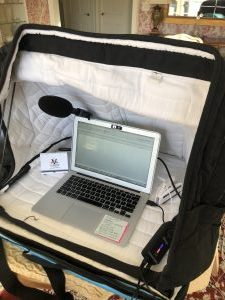
 There are a lot of things that will make 2020 memorable for the rest of our lives: living through a pandemic, the national election, the state of our country in general. As a long-time professional voice over actor, one of the trends I have noticed in the past few months as bookings have picked up again is that so many of them involve live sessions also referred to as guided sessions. Prior to Covid-19, I would say that I self directed 80% of my work, and the rest were live sessions. Now I have live sessions almost daily. Interestingly most of my clients prefer zoom, although often I am asked if I have Source Connect and specifically which version I have. I do happen to have the highly sought after standard version, but interestingly that is not what is most often requested by my average client when they want or need a guided sessions. How do I feel about this rise in live sessions? I love them!
Genres Using Them
I see this rise in live sessions occurring across genres, but in particular in commercials, in explainers, and in eLearning. I also have been booking a lot more work with NDAs for these sessions, and that seems much more common this year. Across the genres, I am booking a blend of covid specific and good, old-fashioned brand relevant content. I think the clients love the live sessions because they can really get the read they want when they want it.
Trends I Have Noticed
 The major trend I have noticed is how many participants are in on the call. It used to just be one or two except when I was doing video games or mobile apps, then I typically had more. Recently, on almost all of my sessions except for a tv spot last week that was just one producer, there are huge teams of 7 or 8. They seem to like to bring on everyone from the person who cast me to the person who wrote the script to the folks from the brand to the creatives putting the content together. The teams are big. And what seems to happen now is that one person will give directions. Then they will tweak the directions. Then when they are satisfied they will ask for feedback from everyone else on the team. This can go on an on and it can be very amazing, depending on how patient you are. As I have been fortunate to have a lot of well-written scripts, it is typically easy to provide alternative reads, but that is not always the case. Most of the time the teams are on the same page and most of the people keep themselves on mute. I have been on a few calls where someone forgets to mute themselves and we have some issues later.
 As I mentioned earlier, a lot of my clients ultimately ask for zoom even though I have Source Connect. I actually think this is related to the trend of included everyone in the live session. It is much easier to loop everyone in via zoom, when with Source Connect only the ones with the subscription can join.
Why They Are Great
Guided sessions are wonderful. Put simply, clients finish with what they need! It does not end until the client has what they need. If it does, they have to pay for a new sessions. I also happen to love the creative energy and the back and forth that happens in a live session. If you are lucky enough to get a good rhythm going, then you can really make something special together. Most of the time I too feel that the work that came out of a live session is different than what I would have submitted had I self directed. You just end up going in different directions based on where the client and the production team takes you. They have a specific vision in their head and you have this amazing opportunity to bring that sound to life. The collaborative process is incredible. Providing instant gratification, knowing that your client will end the session with the pristine audio they need to complete the spot is a really good feeling. There is no back and forth. There are no more takes. And working together as part of the creative team is so much more fun than doing it alone.
Just be Mindful of Time Zones
 One quick note, as the voiceover industry is typically quite an international one, do mind your time zone conversions! It can be trickier than it seems! Years ago I had a session with a client in the South of France. I was coming back from the beach myself, and little did I realize I asked them to record at 10 PM their time. I felt terrible. More recently I had a new client in Mountain Time! I was so confused by this. I don’t know why, but it twisted my head in a pretzel. So, especially if you have multiple bookings in one day, try not to overlap them! The zoom calendar is super helpful that way!
 As a professional voice over actor, I can say I interact with industry contacts as just that, as a professional. I get auditions, I submit auditions. It is non-emotional. It’s business. When I connect with people on Facebook or LinkedIn, it’s business. I’m delighted, but still, it’s a business contact. Yet, there is a degree of trust that we must assume when we interact with clients and new contacts alike in the voiceover industry, right? Voice actors like myself often send recorded audio to people, whether they be clients or prospects, that we actually know very little about, and when we do this we trust that the audio we send is being used under the agreed upon terms. We trust that it is not manipulated. We trust them with our contact information. There is a lot of trust going on. For those of us who are working mothers, who have a family at home, we have a lot invested in the businesses we have built, and this trust is no joking matter.
 I posted in the “Voice-Over Mamas” Facebook Group asking other
  Besides feeling shaken, I have not changed my setup yet. I have lots of questions. I think more than changing what how I am set up, this icky feeling (for lack of a better word) will stick with me. This feeling of vulnerability is not a pleasant one and I think that when future contact behave in a way that is outside the norm I will simply pass on the opportunity. I am not desperate for work, I am established in my career. I would rather forgo something that does not seem right than expose myself and my family to potential harm.
 Do you ever listen to the Taylor Swift song “You Need to Calm Down” and think she is singing directly to you? I can’t be the only one. So as proud as I am to be a working mom running my own small business, I would be lying if I told you I was always able to separate my feelings from my work 100% of the time. I think when you are as passionate about your industry as I am about voice over, remaining detached and having good perspective all the time can be a challenge. Why does staying calm matter? Regardless of the business scenario at hand, as voice over actors we need to remain calm in order to cultivate and maintain meaningful client relationships.
 If we have ever met in person, you would pick up right away that I do not have a calm, relaxed energy. Having spent much of my adult life in New York City, the frenetic vibe of the city always suited me just fine and if anything I thrived feeling that pulse. I will say that recent life during the pandemic has made me want to take things a little slower. Now that I am home with my family 24-7, remaining calm seems much better than getting bent out of shape over every little thing. If I let the small stuff get to me, this pandemic would be impossible to get through. I am trying to actually live by the advice I give my children. And of course, by the brilliant lyrics of Taylor Swift: “But I’ve learned a lesson that stressin’ and obsessin’ ’bout somebody else is no fun…You need to calm down, you’re being too loud.”
 Each session got my wheels turning for different reasons, but during Armin’s session that was around 11 AM EST, when he spoke of defining quality in the industry. My head was bursting with ideas. If you don’t know Armin Hierstetter, he is the founder and CEO of the online casting platform Bodalgo. Unlike some platforms where you can simply sign up, Bodalgo stands apart because Armin has a screening process to begin with, setting a bar for “quality” from the start. In his talk, Armin spent a bit of time talking about what is going on industry wide in terms of quality, what quality looks like, and how quality could be achieved.
 It is imperative that in order to be competitive in the voice over industry today a talent must have coaches and continue to work on their craft. When I started I did a combination of one on one coaching in specific genres, online classes, acting and improv. Whether or not you are working towards a demo, a good coach will help you develop your strengths and identify your weaknesses. They will also help you identify next steps and encourage you with other genres of voice over that would likely be a good fit. As MaryLynn mentioned in her blog post,
  If you want to succeed in voiceover, there are not short cuts to creating quality work. There is an industry standard and the bar is high. That is what books. If you are aware of those of us who continue to book at this time, the answer to what sets them apart is one word: quality.
 As a professional voice over actor, I get requests for RUSH jobs all the time. This is why it is so important to be a full-time voice talent, so that I am always available when clients need me. I get requests from standing clients that I have worked with repeatedly and from new clients who happen to need something right away. Folks need audio in a hurry for all sorts of reasons. Sometimes they are just too close to their deadline. Sometimes those in productions were also hired late and the commercial, video, or social media is set to air and the VO is often the last piece of the puzzle. Sometimes it is an