How Did I Manage to Mis-Quote the Client
 For the first time in my five years as a full time voice over actor I mis-quoted a client. In truth, I was extremely tense about the election results so if I did not make a mistake here I could have made one some where else. A new client found me on LinkedIn for a toy project. I have a tight NDA, but I can say that it’s a toy and right away my voice seemed like the perfect fit for this project.
The first mistake that I made was that I opened the script on my phone. I was in my booth doing an eLearning job. I think we all feel that sense of urgency to reply promptly so that the client doesn’t go to another option, and I had so many screens open in my booth, that it seemed easier at the time to look at this on my phone. The client sent an excel spread sheet. At the top of the spread sheet were four highlighted very short sentences. I looked at the spreadsheet several times, did not see any other content, and each time I checked it was on my phone. It was my understanding that these highlighted lines were the entire script.
To be clear, I am often sent very small scripts in different genres, so this in no way seemed odd. I do a lot of commercial work, and there are a lot of short, 15 second, commercials. Even in eLearning, sometimes I am cast for one short role in a module, so this short script for the toy in no way seemed unusual. When I replied to the client, I was very clear to outline my standard toy rates, my toy revision rates, and what my quote would be for this job given how short the script was. I explained that I would provide two versions and the audio would be in what ever form they needed, fully edited, and ready for use. The client responded that they would be moving forward in the coming days.
How I Realized My Error
 When the client had their final script, they emailed me an NDA and a contract. Then they emailed me the finalized script which was again an excel spreadsheet. In the email they confirmed the initial rate. To my horror, I realized immediately that I had under-quoted the client significantly. The script was not 4 lines, It was 154 lines. Further, they needed the files split which was also not included in the initial bid. My heart sank. I never want to disappoint a client or to make their job harder. I genuinely thought the job was the first four lines. I am not clear whether or not the client was also questioning if the bid covered the full scope of the project by the way their email was written, but I still had to re-quote. With all the work I had, I would be spending a good deal of time on this and could not do the job for the rate I had initially quoted. I felt, though, like a buffoon.
How did I Decide How to Handle My Mistake
 Immediately I messaged my accountability group with whom I speak to all the time, every day. I trust these women more than anyone to lead me in the right direction. When they did not respond within minutes, I called them. Two of them were actually together at that moment, and they helped me draft a thoughtful and sincere email to address my error and revise the quote. It began with “I do apologize but…” I felt awful about doing it but I also could not live with myself if I did not. Interestingly, it was the opinion of two of the others in the group that the error was mine and I should do the job at the lower rate. They pointed out that I risked both losing the client and that if this client knows other clients I risked tarnishing my reputation. I weighed my options and sent the email with the revised quote.
What I would do Differently Next Time
- I would open the email on my iMac.
- I would not be in such a rush to reply. The few minutes could save a lot of aggravation later.
- If I was unclear about the scope of work I would call the client.
- I would ask more questions before doing the quote.
- I would give a tiered quote (which I often due) that covers different lengths of work so that I am covered either way.
How it Worked Out
 The client was not pleased when she got the email with the revised quote she had to go back to both her team and to the clients for approval. The next day I heard that they were ready to move forward. I ended up having to call the client. When I downloaded the excel spreadsheet, I had some formatting issues as a Mac user. I called the client and they were extremely helpful. It was actually great to speak with them and have yet another opportunity to apologize and let them know that I genuinely did not intend to make things difficult for them. Our chat went very well and I am extremely thankful to have laid what I hope is the foundation of a good working relationship.
 My recent commercial booking for JP Morgan makes for a great case study in voice over bookings. As a professional voice actor, every booking makes us happy, but when the producer emailed me about these radio spots, his explanation was interesting. I was cast directly without auditioning. He did not mention my voice. Nor did he mention my demos. In this instance, it was a matter of scheduling and availability. As I work full-time, they needed someone who could accommodate a live session at a specific time, which turned out to be 11 a.m. on a Friday morning, and he needed to confirm that I was available. The timing, in this scenario, was the most important question I was asked. The producer got back to me and confirmed that I had indeed booked two spots and it was a go. I was delighted.
 I prepare for every single session, whether I am self-directing or in a live session. Part of my prep is administrative. I take some time to log the job in my CRM and create the invoice. I then print a large print version of the script using my preferred font. Then, prior to marking up the script, I spend a bit of time researching the brand and their other ads. Interestingly, JP Morgan and Chase are linked. As a client, when I log in for my JP morgan account I also log into my chase account. Well, at the moment, the below Chase spot is the most sought after read in a long time. Clients often request this as the benchmark for tone, style, and pacing, so I had this in mind going into my session for sure.
 I think the start of a live session is really important. There happened to be a lot of people on this call. In addition to the producer, there were several people from the Spotify team and several people from the JP Morgan Team, including the scrip writer. In my mind looking back here were at least eight people on the session. It is my job to make them happy and to make them comfortable. I try to use the time at the start of the session to let them know that my feelings are not a factor, and that the only thing that would upset me would be for them to know have exactly what they need at the end of the call. I try to have friendly banter, but I want them to know and to be comfortable that I will give them whatever they need, and that it is not about me, it is about them. I think there are a few precious moments to establish this rapport and set the tone.
 With so many on the call, there can be a lot of side chats during a directed session to make sure everybody has the takes that they want. This team was fantastic. They gave very clear direction and it was easy to take their feedback and run with it. They also all remembered to mute themselves while I was recording, which makes everything seamless. In this session, I read the first script all the way through three times. They gave me feedback. I again did three takes, and then we did some variations of the lines. Then, after the line reads, we did the whole script again. It really came together nicely. It was also super exciting to use Zoom’s audio share feature to play back the audio for the clients during the session so that they could mark the takes that they liked and we could also check the timing of the spots. Then we moved on to the next script, and worked through it the same way. The second one went a little faster as I understood what they were looking for from the first spot. All in all, the group was great to work with. For me, because JP Morgan is my bank and I use the app, it was easy to see the product and be enthusiastic about it because I actually enjoy the very features I was describing.
 I am often asked whether I prefer live sessions or self directing. The answer is really that it depends. I love self directing because it gives me a chance to be creative and a freedom to interpret the texts in front of me. I can explore my imagination and see where it goes. The downside, of course, is that there is always a chance of missing the mark and not giving the client what they need. With live sessions, I love the creative collaboration. I love working with other people. When I have the opportunity to work with the people who created the product or the people who wrote the script, I get a higher level of understanding and can often bring more nuance to the read. So, the answer is still: I depends.
 I have been blessed to have three precious dogs in my life, and each of them has brought me immeasurable joy. I had no idea, however, that when we got our Labrador Retriever Daisy, in addition to being super sweet and super smart, she would also be super challenging to walk without the right training. A neighbor with two Great Dane pups introduced me to the dog training books by the Monks of New Skete, who have been training dogs since the 1970s. We made the choice to send Daisy for a board and stay training program, and I learned from the brothers that there were a few keys essential to Daisy’s success. We needed to be consistent with her obedience every day and maintain her routine. She would need structured daily exercise. We needed to plan everything- even her walks, to set her up for success. As a small business owner, I realized that in voice over all the lessons that would lead to success for Daisy also hold true to maintaining a successful professional voiceover career.
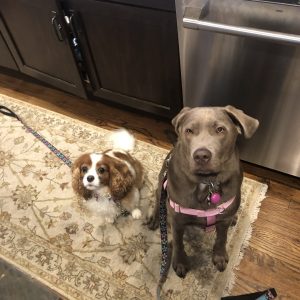 Now back from New Skete, every day Daisy has to run through her exercises, from leave it and heal to place. Similarly, working on my craft is essential every day. From warm up exercises to practicing cold reading, this is part of my daily routine. I recently reflected on this in my blog about the class that I am taking with Kim Handysides, but in order to stay strong in the reads that I submit both as auditions and as booked work, this daily work is essential to my success.
 Just as Daisy needs her purposeful walk, I need a certain amount of daily exercise to stay in shape for voice over, I walk four to five miles a day. I do pilates three times a week. All of that is in addition to my vocal warm ups. When your body is your instrument, you have to maintain your instrument every single day.
 In the same way that communicating well with Daisy strengthens our family bonds, doing all of the above plus communicating well with clients strengthens our connections with them. As they can rely on our work being consistently good and being there when they need it, they will be able to trust us for their clients, and in the end that trust is what matters most. As a professional talent, a new booking is great, but when that new booking comes back, it’s almost as good as when Daisy comes galloping towards me.
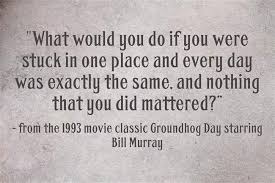 I happened to marry a huge Bill Murray fan, and from Quick Change to Groundhog Day, I think I’ve seen all of his top hits, but Groundhog Day is my favorite. As a working mom, having a system to maintain efficiency is really important but unfortunately that same system often makes every single day feel the same. I go into my booth and warm up. I do my most pressing auditions first. Next I tend to all
  It’s important to pick the right coaches and I’ve been blessed to work with many excellent ones in the years that I’ve been in voice over. Sometimes you want private lessons and sometimes group classes can meet your training needs. Right now I wanted to shake things up. Kim Handysides and her daughter Lisa Suliteanu book a lot of work. They understand what is au courant and have created a curriculum across genres to target bookable reads. Kim has been an industry leader for 30 plus years and her talented daughter Lisa has been working steadily since she was 7 years old and has been full-time since finishing university. In case you’re wondering what the vibe of their class is like, it is upbeat, inspirational, clever, and fun. With so many coaches in the industry at the moment, this class is designed to put voice actors on the path to success and enrolling was a great step for me, even so many years into my career!
 In Groundhog Day, we see Phill Conners taking piano lessons and becoming an amazing pianist. This did not happen over night. It took lots and lots of practice. Right now in The Voice Over Study, we work on different scripts and then can use those tools to go back and really work on a script. The more we learn to unravel it, the better our reads become. For me, having fresh feedback on my reads is helpful. It is also just as helpful to pay attention to the reads of the other voice actors in the class, listen to how they approach the scripts, and think about the feedback that they are given. I try to incorporate this approach into both my auditions and my booked work and bring some freshness to it all.
 In Groundhog Day, we see Phil’s relationship with others in the town blossom and develop throughout the film as he gets to relive each day. For me, having an opportunity to meet other voice over actors is really valuable. The other talents in the class are from different parts of the United States and Canada. We are at different points in our careers and we all aspire to focus on different genres of voice over. Still, I think knowing other voice actors is essential to our success, and I am so thankful to be getting to know the other actors in this class as we all learn together.
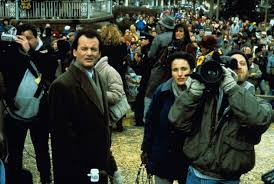 Just as we see Phil repeatedly attempting to cover the story about Punxsutawney Phil, there are countless ways each script can be approached, so wouldn’t it save a lot of time and energy to understand which reads are actually booking right now? That is the point of “The Voice Over Study,” the nuances of the bookable read are not necessarily my go to read, so I am so thankful for the first few sessions already! For example, the words to emphasize or blend may not be what I had thought of, so this valuable feedback, and the reinforcement of it, makes Kim and Lisa’s class outstanding. In class last week, Kim directed me to hit words I never word have that to enunciate, and the overall gestalt of the read was just a million times better. Her instincts are amazing. Kim and Lisa book A LOT of work on their own, and my goal is to be as busy as they are!
 In class we have homework. We have scripts to prepare and we are also supposed to work on cold reading. I also love this, as both make me more efficient and more effective in my daily work. These tasks are something that I look forward to, as I feel like I am taking control of my career and determining my own path.
 Ah September. If you can actually remember what life was like pre-pandemic, September used to feel like a huge shift for us working moms, with an audible sigh of relief heard from coast to coast. While having our kids home to spend time by the pool and doing crafts is a time of joy, for solopreneurs who have always run our small businesses from home, summer has always involved juggling lots of balls. This year, 2020, has presented a whole new set of challenges, and if your family is like mine, your kids are “back in school” without leaving your house. While I confess that I am enjoying the extra time I have with my teens, it does present a lot of challenges for those of us whose career depends on quiet in the recording booth. Doors slamming, thumping and thudding on the steps, random proclamations- these barely scrape the barrel of what the new normal is like. The quietude is gone and with it I have, you guessed it, more balls to juggle as both my children and my husband are now in the house. All day. Every day. So no, this September, being a working mom and small business owner it is not easier, but I do have some strategies for coping in order to ensure that my goals stay in clear focus.
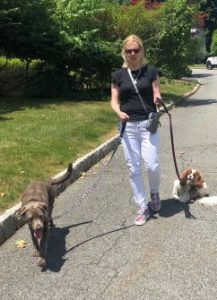 In order to maintain the balance between my role as a mom and my life as a professional voice over actor, accountability in my professional career is extremely important. I have blogged before about my group, but one of our touch points is health and wellness. When we started reporting on this years ago, I did not realize that the relevance of this area would increase in importance. Who could have predicted a pandemic? Every day wellness is a priority, including: steaming, supplements, eating well, etc.
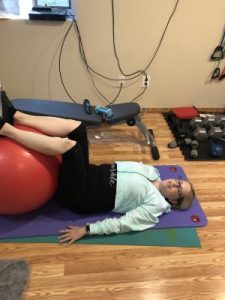 Pilates is another focus of mine. After a difficult twin pregnancy, I have spent years rebuilding my core. I love that through the pilates I work on my breathing and that the workouts are total body workouts. I am learning to make connections and to listen to myself. Work as a voice over actor so much depends on connecting with people and connecting with scripts, so if I am connected with myself as a foundation of it all, I work better. At the start of every session, my instructor asks how I am feeling and for me to be aware of where my body is starting. I wish that I had people teach be to be aware of my physical state in this way when I was 12 years old. I think I would have treated myself very differently. In any event, I am thankful for this journey that I am on and pilates helps me very much.
 “Don’t give up what you want most for what you want now.” Ultimately all of this matters because working moms have goals. As a voice actor, I have spent years building my business. It isn’t about getting through September, it is about making life work so that I reach these goals for myself and for my family. If we can’t see the forest through the trees, we just won’t get where we have worked so hard to go. In the shadow of the passing of the great Ruth Bader Ginsburg, we have a great torch to carry. She did it with such ease, and we must carry on for our children so that we can finish the work she set out to do.

